
Embryo Transfer in Noida The final step of your IVF cycle, performed with care and precision
Embryo transfer is the procedure in which one or more embryos are placed into the uterus during an IVF cycle. It is usually a short, painless procedure and is often described as one of the most anticipated steps of fertility treatment.
What is Embryo Transfer?
Embryo transfer is the procedure in which an embryo, created in the laboratory through IVF or ICSI, is placed into the uterine cavity using a thin, soft catheter. It is typically performed a few days after egg retrieval and fertilisation, once the embryology team has assessed embryo development.
Embryo transfer may be performed as a fresh transfer, where the embryo is transferred in the same cycle as egg retrieval, or as a frozen embryo transfer (FET), where a previously frozen embryo is thawed and transferred in a later, separately prepared cycle. The choice between fresh and frozen transfer depends on individual factors such as hormone levels, endometrial lining, and embryo quality.
At Divine IVF, Sector 76, Noida, Dr. Mandavi Rai and the embryology team plan the timing and approach of embryo transfer individually for each patient, aiming to support the best possible chance of implantation.
How it works
Step 1 – Embryo Assessment
The embryology team evaluates embryo development and selects the embryo(s) considered most suitable for transfer, based on grading criteria.
Step 2 – Preparing for the Procedure
You will be asked to lie down in a position similar to a routine gynaecological examination. The procedure does not usually require anaesthesia.
Step 3 – Catheter Placement
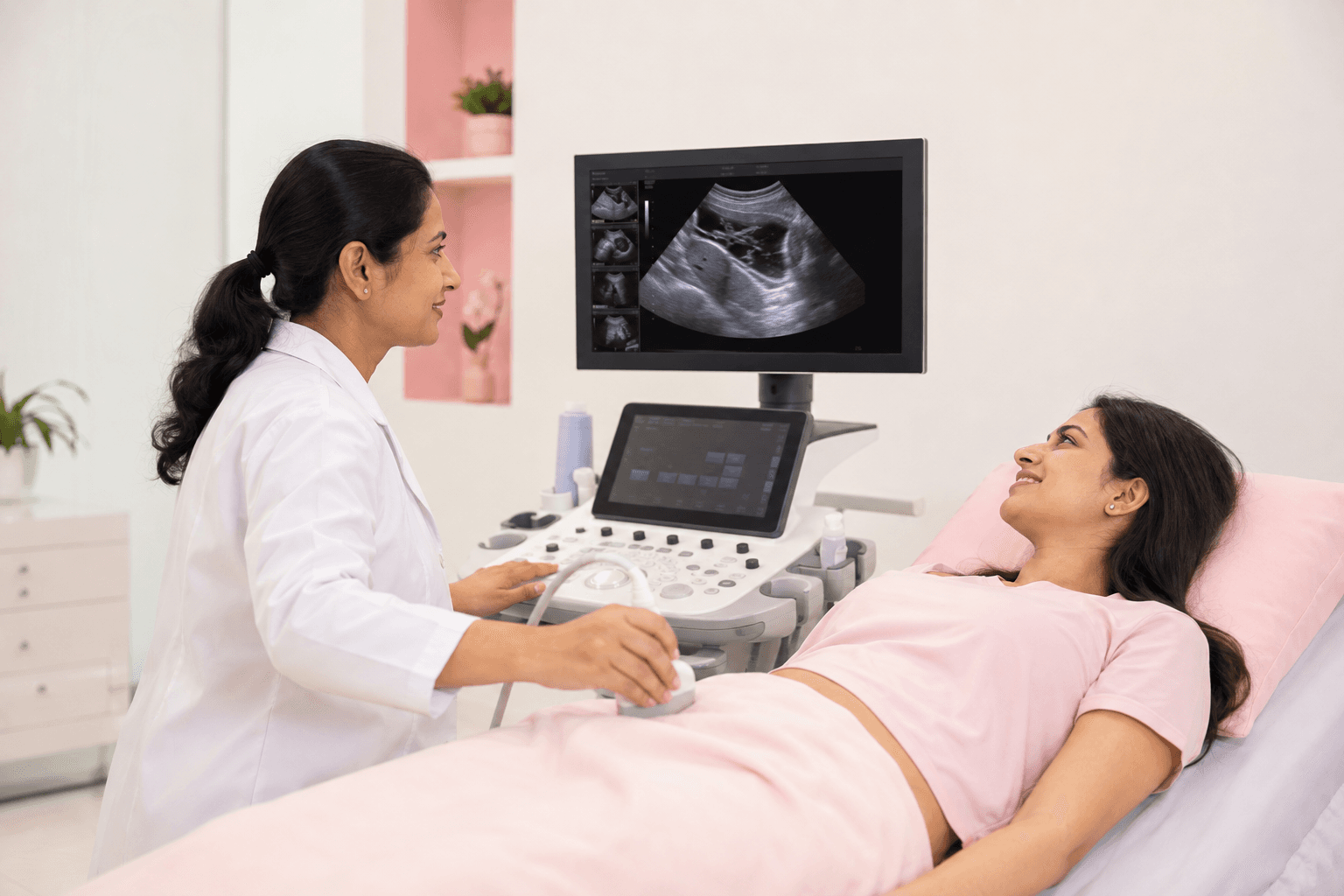
A thin, soft catheter loaded with the embryo is gently passed through the cervix into the uterine cavity, often guided by abdominal ultrasound.
Step 4 – Embryo Placement
The embryo is carefully released into the uterine cavity at the appropriate location, and the catheter is then withdrawn and checked by the embryology team.
Step 5 – Rest and Recovery
You may be asked to rest briefly at the clinic before going home. Normal daily activity can usually be resumed the next day unless your doctor advises otherwise.
Benefits
- Represents the culmination of the IVF process, giving the embryo the opportunity to implant in the uterus
- Ultrasound-guided placement helps position the embryo appropriately within the uterine cavity
- Frozen embryo transfer allows flexibility — embryos can be transferred in a future cycle when the uterine lining is optimally prepared
- A short, generally well-tolerated outpatient procedure that does not usually require anaesthesia
- Allows single embryo transfer to be considered where appropriate, reducing the chances of multiple pregnancy
Things to know
- Not every embryo transfer results in pregnancy; implantation depends on embryo quality, uterine receptivity, and other biological factors
- Mild spotting or cramping after transfer is common and does not necessarily indicate a problem
- The number of embryos transferred is usually discussed and agreed in advance, considering multiple pregnancy risks
- A two-week wait before the pregnancy test can be emotionally challenging — the clinical team is available to answer questions during this period
- Frozen embryo transfer cycles require their own preparation timeline and cannot always be performed immediately
Getting ready
For a fresh transfer, no special preparation is usually required beyond what has already been done during the IVF cycle; your doctor will confirm the exact day of transfer based on embryo development.
For a frozen embryo transfer, the uterine lining is prepared in advance using hormonal medication or a natural cycle protocol, with the transfer scheduled once the lining is considered suitable.
A comfortably full bladder is often requested before the procedure, as this can help visualise the uterus on ultrasound during transfer — the clinic will guide you on timing.
You may be advised to avoid strong perfumes, deodorants, and nail polish on the day of transfer, as some clinics prefer this for the embryology lab environment.
What to expect
Embryo transfer itself is usually quick, often taking only a few minutes, and is generally described as similar to a Pap smear in terms of discomfort. Most patients do not require sedation. You may feel mild cramping during or after the procedure. Afterwards, your doctor will advise on medication support, activity levels, and the approximate date for a pregnancy test — usually around 10-14 days later.
Embryo Transfer in Noida
Ultrasound-guided embryo transfer, planned individually for your IVF or frozen embryo transfer cycle at Divine IVF, Noida.
📍 Sector 76, Noida, Uttar Pradesh
📞 Call: +91 7678451808

Types of Embryo Transfer
Fresh Embryo Transfer
The embryo is transferred within the same cycle as egg retrieval, usually 3-5 days later, once fertilisation and early development are confirmed.
Frozen Embryo Transfer (FET)
Embryos frozen from a previous cycle are thawed and transferred once the uterine lining has been separately prepared, offering flexibility in timing.
Single Embryo Transfer (SET)
Transferring a single, carefully selected embryo, often recommended to reduce the risk of multiple pregnancy while maintaining reasonable success rates.
Day 3 vs Day 5 (Blastocyst) Transfer
Embryos may be transferred at the cleavage stage (Day 3) or after extended culture to the blastocyst stage (Day 5), depending on embryo development and clinical judgement.
What Can Affect Embryo Transfer Success
Several factors are considered together when assessing the likelihood of successful implantation, including:
Your fertility team reviews these factors before finalising the transfer plan.



Who May Need Embryo Transfer
Embryo transfer is relevant for anyone who has embryos created through IVF or ICSI, including:
Your doctor will confirm whether fresh or frozen transfer is more suitable for your situation.
What Happens Before Transfer Day
A few key steps typically take place in the days leading up to embryo transfer:
Endometrial Preparation
For frozen transfers, hormonal medication or a natural cycle protocol is used to develop a receptive uterine lining, monitored through ultrasound and sometimes blood tests.
Embryo Grading
The embryology team assesses and grades embryos to help select the one(s) considered most suitable for transfer.
Trial or Mock Transfer
In some cases, a trial transfer may be performed beforehand to assess the ease of catheter passage and plan the actual procedure.
Final Confirmation
Your doctor confirms the transfer date once lining thickness, hormone levels, and embryo readiness align.
Support Options Around Embryo Transfer
Depending on individual history, additional measures may be discussed alongside embryo transfer.
Embryo Glue
A hyaluronan-enriched transfer medium sometimes used with the aim of supporting embryo attachment to the uterine lining.
Endometrial Receptivity (ERA) Testing
Helps identify the optimal window for transfer in select patients with previous implantation difficulties.
Luteal Phase Support
Hormonal medication after transfer to support the uterine lining during the implantation window.
Preimplantation Genetic Testing
May be used before transfer in selected cases to assess embryos for chromosomal status.
Why Embryo Transfer Planning Matters
- ✓ Individualised TimingTransfer day is planned according to your specific hormonal and embryo development profile.
- ✓ Ultrasound GuidanceHelps support accurate embryo placement within the uterine cavity.
- ✓ Flexibility with FreezingFrozen transfer allows the lining to be optimally prepared in a separate cycle.
- ✓ Reduced Multiple Pregnancy RiskSingle embryo transfer can be considered where clinically appropriate.
If you have completed egg retrieval or have frozen embryos ready for transfer, Dr. Mandavi Rai and the team at Divine IVF, Noida can guide you through the next steps.
Book IVF ConsultationResources
Common questions
Embryo transfer is generally not painful. Most patients describe it as similar to a Pap smear, with mild discomfort at most and no need for anaesthesia.
The procedure itself usually takes only a few minutes, although you may be asked to rest at the clinic for a short period afterwards.
A fresh transfer takes place in the same cycle as egg retrieval, while a frozen embryo transfer uses previously frozen embryos, transferred in a separately prepared cycle.
The number of embryos transferred is decided individually, taking into account embryo quality, patient age, and the risk of multiple pregnancy.
Your doctor will provide specific guidance, which may include continuing prescribed medication and avoiding strenuous activity for a short period.
A blood pregnancy test is usually advised around 10-14 days after transfer, as your clinic will confirm.
Most patients can resume normal daily activity the next day, though your doctor may suggest avoiding strenuous exercise for a short period.
If pregnancy does not occur, your doctor will review the cycle and discuss options, which may include a further frozen embryo transfer or adjustments to the treatment plan.
Extended bed rest is not usually required and has not been shown to improve outcomes; brief rest at the clinic is generally sufficient.
Cost depends on whether it is a fresh or frozen transfer and whether it is part of a full IVF cycle. Book a consultation for an individualised estimate.
Ready to talk to Dr. Mandavi Rai?
Bring your questions, your history, and your pace — we`ll build the next step together.