
Embryo Glue for IVF in Noida Hyaluronate-enriched embryo transfer medium for selected IVF and embryo-transfer cycles
If you are preparing for embryo transfer during IVF or have experienced previous unsuccessful embryo transfers, you may have heard about Embryo Glue as an optional fertility treatment add-on.
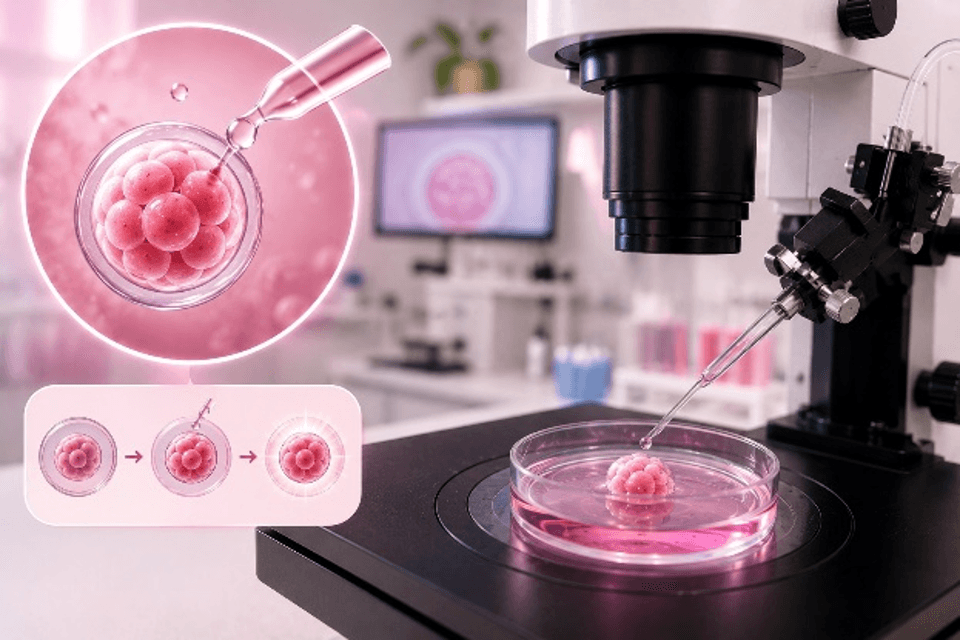
What is Embryo Glue for IVF?
Embryo Glue is a term commonly used for a hyaluronate-enriched embryo transfer medium. The medium contains substances designed to support embryos during the short period before and during embryo transfer.
One of its important components is hyaluronan, also known as hyaluronic acid. Despite the name, Embryo Glue is not actually a glue. It does not attach the embryo mechanically to the uterine lining. Instead, it provides a transfer medium with a higher concentration of hyaluronan.
At Divine IVF, Sector 76, Noida, Dr. Mandavi Rai provides personalised IVF and embryo-transfer planning based on your fertility history, embryo development, uterine health, previous treatment outcomes and available scientific evidence.
Embryo Glue is not an adhesive and it does not physically "stick" an embryo to the uterus. Its routine benefit for improving the chance of having a baby remains uncertain, so it should be discussed as an optional IVF add-on rather than a guaranteed implantation treatment.
How it works
Step 1 – IVF Treatment Review
Before considering an embryo-transfer add-on, your fertility specialist reviews female age, ovarian reserve, previous IVF cycles, embryo quality, previous transfers, previous pregnancies, fertilisation history, and endometrial preparation.
Step 2 – Embryo Development
Following egg retrieval and fertilisation, embryos are cultured in the embryology laboratory. They are monitored for development before an embryo is selected for transfer.
Step 3 – Endometrial Preparation
The uterine lining is prepared according to the planned transfer protocol. This may involve natural-cycle monitoring, hormonal preparation, ultrasound monitoring, and progesterone timing.
Step 4 – Embryo Selection
A suitable embryo is selected according to the IVF treatment plan and embryology assessment.
Step 5 – Embryo Glue Medium
If a hyaluronan-enriched transfer medium is being used, the embryo is placed in the medium before transfer.
Step 6 – Embryo Transfer
The embryo is loaded into a thin catheter and transferred into the uterine cavity. The actual transfer procedure is generally brief and typically does not require anaesthesia.
Step 7 – After Embryo Transfer
Patients can generally follow their fertility specialist's usual post-transfer instructions. Embryo Glue does not require special bed rest or additional activity restrictions.
Step 8 – Pregnancy Test
A pregnancy test is performed according to the timeline recommended by the fertility specialist.
Benefits
- Hyaluronan-Enriched Environment — The embryo is exposed to a transfer medium containing a relatively high concentration of hyaluronan
- Simple Laboratory Add-On — Its use does not require an additional invasive procedure for the patient
- Compatible With Embryo Transfer — It can be incorporated into the laboratory stage immediately before transfer
- Possible Benefit in Some Studies — Certain studies have reported improved outcomes, although results across the evidence base remain inconsistent
- Does not add any extra procedural step or discomfort for the patient
Things to know
- It does not physically glue the embryo
- It does not guarantee implantation
- It does not guarantee pregnancy
- It does not guarantee live birth
- It cannot correct embryo chromosomal abnormalities
- It cannot correct significant uterine problems
- Routine benefit remains uncertain
- It may involve an additional treatment charge
- Current studies have produced conflicting results regarding whether this provides a meaningful live-birth advantage for most patients
Getting ready
Before considering an embryo-transfer add-on, your fertility specialist reviews female age, ovarian reserve, previous IVF cycles, embryo quality, previous transfers, previous pregnancies, fertilisation history, and endometrial preparation.
Following egg retrieval and fertilisation, embryos are cultured in the embryology laboratory. They are monitored for development before an embryo is selected for transfer.
The uterine lining is prepared according to the planned transfer protocol. This may involve natural-cycle monitoring, hormonal preparation, ultrasound monitoring, and progesterone timing.
No separate preparation is required for Embryo Glue — the decision to use it is made ahead of your transfer day as part of planning the specifics of that procedure. It doesn't change how you prepare for transfer otherwise.
What to expect
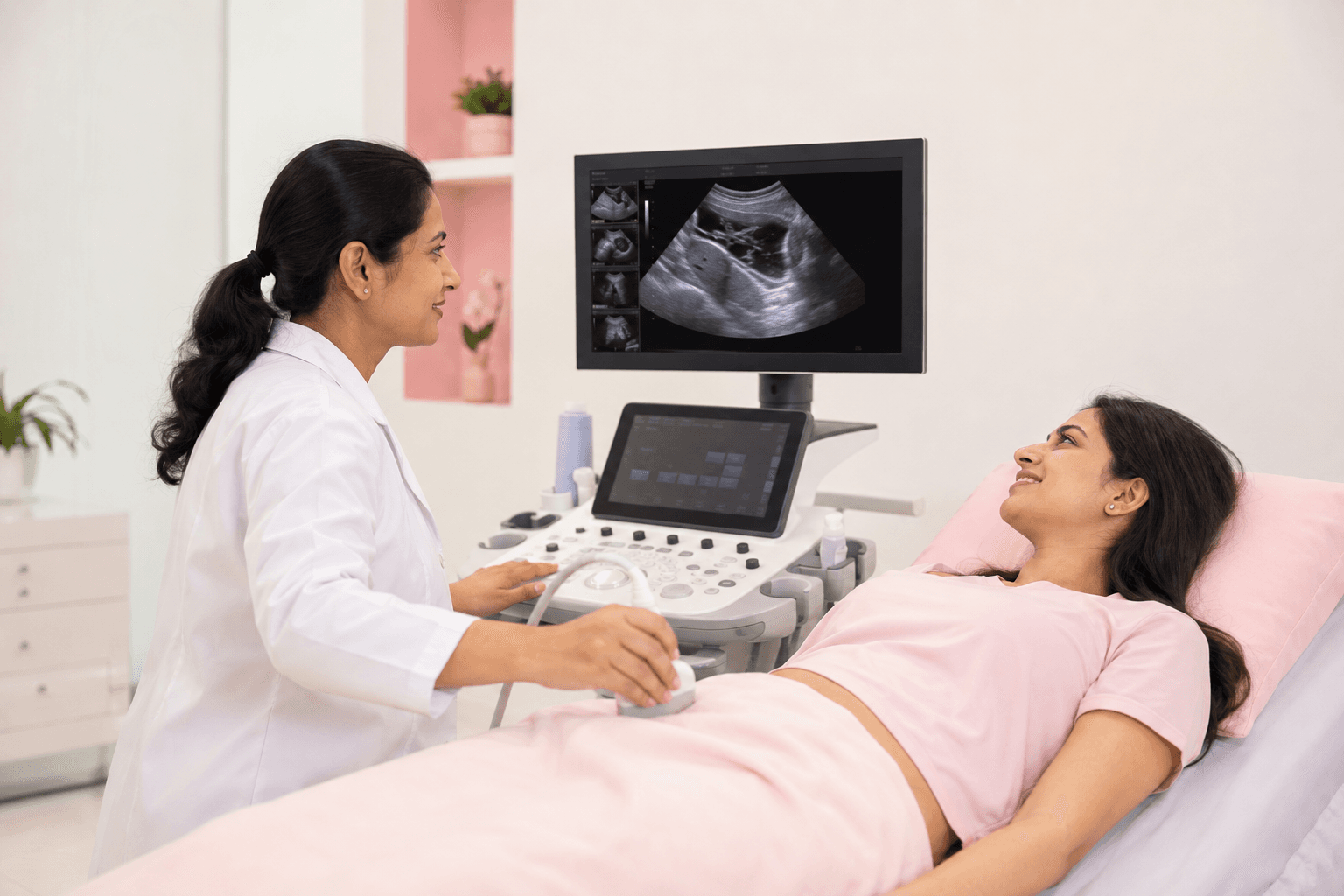
Using Embryo Glue does not change the transfer procedure itself — it remains a quick, generally painless process, typically without sedation. You won't feel any difference during the procedure, as the change happens in the lab where the embryo is loaded into the transfer catheter. The only noticeable difference is a slightly more viscous transfer medium. Dr. Rai and the embryology team will ensure the transfer is performed with the same care and precision as always.
Embryo Glue for IVF in Noida
Hyaluronate-enriched embryo transfer medium for selected IVF and embryo-transfer cycles at Divine IVF, Sector 76, Noida.
📍 Sector 76, Noida, Uttar Pradesh
📞 Call: +91 7678451808

What Is Embryo Glue?
Embryo Glue is a term commonly used for a hyaluronate-enriched embryo transfer medium.
The medium contains substances designed to support embryos during the short period before and during embryo transfer.
One of its important components is hyaluronan, also known as hyaluronic acid.
Despite the name, Embryo Glue is not actually a glue. It does not attach the embryo mechanically to the uterine lining. Instead, it provides a transfer medium with a higher concentration of hyaluronan.
How Does Embryo Glue Work?
Before embryo transfer, the selected embryo may be placed in a hyaluronan-enriched transfer medium.
The proposed theory is that hyaluronan may support interactions between the embryo and the endometrium around the time of implantation.
The process generally involves:
- Selection of an embryo for transfer
- Preparation of the embryo in the transfer medium
- Loading the embryo into the embryo-transfer catheter
- Transfer of the embryo into the uterus
- Natural implantation processes following transfer
Embryo Glue does not force an embryo to implant.
What Is Hyaluronan?
Hyaluronan is a naturally occurring substance found in many tissues of the human body. It is also present within the reproductive tract.
Hyaluronan-enriched embryo-transfer media have been developed based on the theory that a higher concentration around embryo transfer may provide an environment supportive of embryo-endometrial interaction.
However, whether this translates into a meaningful improvement in live birth for most IVF patients remains uncertain.
Is Embryo Glue Really a Glue?
No.
The name can be misleading.
Embryo Glue:
- Does not contain conventional adhesive glue
- Does not physically stick an embryo to the uterus
- Does not prevent an embryo from moving
- Cannot guarantee implantation
It is an embryo culture and transfer medium containing hyaluronan.
When Is Embryo Glue Used?
If selected, Embryo Glue is generally used shortly before embryo transfer.
The embryo is placed in the hyaluronan-enriched medium before being loaded into the embryo-transfer catheter.
It can potentially be used with:
- Fresh embryo transfer
- Frozen embryo transfer
- Blastocyst transfer
The laboratory and clinical team determine whether it is appropriate for an individual cycle.
Who May Discuss Embryo Glue?
Embryo Glue should not automatically be used for every IVF patient.
Previous Unsuccessful Embryo Transfer
Patients who have experienced unsuccessful embryo transfers may ask about additional transfer-related options. However, the cause of unsuccessful implantation should be reviewed before automatically adding treatment add-ons.
Recurrent Implantation Concerns
In patients with repeated implantation failure, the fertility team may review embryo quality, chromosomal factors, uterine cavity, endometrial factors, transfer technique, female age, and male fertility factors. Embryo Glue may be discussed, but evidence of benefit remains uncertain.
Frozen Embryo Transfer
Embryo Glue may potentially be used during selected frozen embryo transfer cycles. Its use does not change the basic FET process.
Blastocyst Transfer
A blastocyst selected for transfer may be exposed to a hyaluronan-enriched transfer medium before the procedure.
Does Every IVF Patient Need Embryo Glue?
No.
Embryo Glue is an optional IVF add-on, not a standard requirement for successful embryo transfer. Most fertility patients can undergo established IVF and embryo-transfer treatment without additional add-ons.
The decision should consider clinical indication, current evidence, cost, previous IVF outcomes, and individual treatment priorities.


Embryo Glue in Specific Situations
Embryo Glue and Frozen Embryo Transfer
Embryo Glue can be discussed as an optional transfer medium during Frozen Embryo Transfer (FET). A typical FET involves endometrial preparation, progesterone timing, embryo thawing, laboratory assessment, and embryo transfer. Using Embryo Glue only changes the transfer medium used around the embryo. It does not replace appropriate endometrial preparation or careful embryo-transfer timing.
Embryo Glue and Blastocyst Transfer
Embryo Glue may also be used when transferring a blastocyst. However, the likelihood of implantation continues to depend on several factors, including embryo competence, female age, chromosomal status, uterine health, endometrial preparation, and transfer technique. The transfer medium is only one part of the overall process.
Embryo Glue vs Other IVF Add-Ons
Embryo Glue vs Normal Embryo Transfer Medium
Standard Medium
The embryo is maintained in a specialised laboratory medium appropriate for transfer.
Hyaluronan-Enriched
The medium contains a higher concentration of hyaluronan. The proposed goal is to provide conditions that may support implantation-related interactions. However, current studies have produced conflicting results.
Embryo Glue vs ERA Test
These are completely different IVF add-ons. Embryo Glue is a hyaluronan-enriched embryo-transfer medium used around the time of embryo transfer. ERA Test is an endometrial receptivity test involving a biopsy that attempts to assess transfer timing. Neither should automatically be added to every IVF cycle.
Embryo Glue vs Assisted Hatching
Embryo Glue changes the medium surrounding the embryo before transfer. Assisted Hatching involves manipulation of the embryo`s outer layer with the intention of helping it hatch. These procedures have different proposed mechanisms and evidence bases.
Embryo Glue and ICSI
ICSI and Embryo Glue perform different functions. ICSI is when a sperm is injected directly into an egg to assist fertilisation. Embryo Glue is a transfer medium that may be used later, around the time an embryo is transferred into the uterus. A patient may undergo ICSI without Embryo Glue.
Does Embryo Glue Improve IVF Outcomes?
Does Embryo Glue Improve Implantation?
Some studies have reported improved outcomes with hyaluronan-enriched transfer media, while others have not found a clear benefit. As a result, the current evidence is conflicting.
Embryo Glue should therefore not be described as a proven method of ensuring implantation.
Does Embryo Glue Increase IVF Success?
It cannot currently be stated that Embryo Glue reliably increases IVF success for every patient.
The HFEA currently rates hyaluronate-enriched embryo-transfer medium amber for improving the chance of having a baby for most fertility patients. This means moderate/high-quality studies have produced conflicting results.
Does Embryo Glue Increase Live Birth Rate?
Current research has not established a clear live-birth advantage for all IVF patients. Some studies suggest a possible benefit, while others do not. More high-quality research is needed before a definite routine benefit can be claimed.
Can Embryo Glue Prevent Implantation Failure?
No treatment medium can guarantee implantation.
Repeated implantation failure may involve:
A comprehensive review is therefore more important than relying only on an embryo-transfer add-on.
Can Embryo Glue Prevent Miscarriage?
Embryo Glue should not be marketed as a proven miscarriage-prevention treatment.
Miscarriage may result from many factors, including embryo chromosome abnormalities, maternal age, uterine conditions, certain medical conditions, and other reproductive factors. An embryo-transfer medium cannot eliminate these causes.
Is Embryo Glue Safe?
Current HFEA information states that hyaluronate-enriched transfer media have no additional known risks to the patient undergoing fertility treatment or to children born following treatment.
However, the absence of known additional risks does not mean that its effectiveness is proven.
Benefits and Limitations of Embryo Glue
Benefits Proposed for Embryo Glue
Possible proposed advantages include:
- Hyaluronan-Enriched Environment — The embryo is exposed to a transfer medium containing a relatively high concentration of hyaluronan
- Simple Laboratory Add-On — Its use does not require an additional invasive procedure for the patient
- Compatible With Embryo Transfer — It can be incorporated into the laboratory stage immediately before transfer
- Possible Benefit in Some Studies — Certain studies have reported improved outcomes, although results across the evidence base remain inconsistent
Limitations of Embryo Glue
Important limitations include:
- It does not physically glue the embryo
- It does not guarantee implantation
- It does not guarantee pregnancy
- It does not guarantee live birth
- It cannot correct embryo chromosomal abnormalities
- It cannot correct significant uterine problems
- Routine benefit remains uncertain
- It may involve an additional treatment charge
Patients should therefore understand both the proposed benefit and current uncertainty.
Embryo Glue After Failed IVF
After unsuccessful IVF, the complete cycle should be reviewed before adding further treatments.
This review may include:
Only after understanding these factors should optional embryo-transfer add-ons be discussed.
Embryo Glue Cost in Noida
The Embryo Glue cost in Noida may vary depending on the IVF clinic and treatment package.
Costs may involve:
Because Embryo Glue is an optional add-on, ask whether it is already included in your embryo-transfer package or charged separately. Also ask what evidence supports its use in your individual situation.
Questions to Ask Before Using Embryo Glue
Before choosing this add-on, consider asking:
Why Choose Divine IVF for Embryo Transfer Planning
- ✓Personalised IVF Assessment — Previous IVF and embryo-transfer history can be reviewed before optional add-ons are discussed.
- ✓Embryo Transfer Planning — Embryo stage, endometrial preparation and transfer timing are considered as part of the treatment strategy.
- ✓Evidence-Based Discussion of IVF Add-Ons — Patients should understand the evidence, limitations and cost of an add-on before deciding whether to use it.
- ✓IVF and ICSI Treatment Options — Depending on the fertility diagnosis, IVF, ICSI and other assisted reproductive techniques can be incorporated into the treatment plan.
- ✓Doctor-Led Fertility Care — Treatment planning is provided under the guidance of Dr. Mandavi Rai, Gynecologist & IVF Specialist in Noida.
- ✓Convenient Location in Sector 76, Noida — Divine IVF is located in Sector 76, Noida, for patients seeking IVF and embryo-transfer treatment in Noida.
Book an IVF & Embryo Transfer Consultation in Noida
If you are planning embryo transfer or have experienced previous unsuccessful IVF treatment and are considering Embryo Glue, discuss whether the add-on is appropriate for your individual case. At Divine IVF, Sector 76, Noida, Dr. Mandavi Rai provides personalised IVF and embryo-transfer planning based on your fertility history and treatment needs.
Divine IVF · Sector 76, Noida, Uttar Pradesh
Resources
Common questions
Embryo Glue is a hyaluronan-enriched embryo-transfer medium that may be used shortly before an embryo is transferred into the uterus.
No. It does not physically stick the embryo to the uterus.
It is a specialised transfer medium with a relatively high concentration of hyaluronan or hyaluronic acid.
The embryo is exposed to the specialised transfer medium before it is loaded into the embryo-transfer catheter.
Evidence is conflicting. Some studies suggest possible benefit while others have not demonstrated a clear improvement.
A clear benefit for most IVF patients has not been established.
No. It is an optional fertility treatment add-on.
Yes, hyaluronan-enriched transfer medium may be discussed in selected frozen embryo-transfer cycles.
Yes, it may be used as the transfer medium for a selected blastocyst depending on the laboratory protocol.
It can be used in an IVF cycle where ICSI was performed, but the two procedures serve different purposes.
No.
It has not been established as a proven method of preventing miscarriage.
Current evidence reviewed by the HFEA has not identified additional known risks to the patient or resulting child from hyaluronate-enriched transfer medium.
The cost varies depending on the IVF centre, embryo-transfer package and whether the add-on is charged separately.
You can consult Dr. Mandavi Rai at Divine IVF, Sector 76, Noida for personalised IVF and embryo-transfer treatment planning.
Ready to talk to Dr. Mandavi Rai?
Bring your questions, your history, and your pace — we`ll build the next step together.