
Female Infertility Treatment in Noida Evaluation and personalised treatment for female fertility factors
Female infertility refers to fertility-related problems in the female partner that may reduce the chance of achieving pregnancy. It can involve ovulation, the fallopian tubes, the uterus, hormonal balance, or other reproductive health factors.
What is Female Infertility Treatment?
Female infertility refers to difficulty conceiving or carrying a pregnancy that is related to factors in the female reproductive system. This may involve problems with ovulation, egg quality, fallopian tube health, the uterine cavity, hormonal balance, or underlying medical conditions such as PCOS or endometriosis.
A detailed evaluation can help identify whether female factors are contributing to difficulty conceiving. Female-related causes are found in a significant proportion of couples experiencing infertility, and evaluation is often more informative when performed alongside assessment of the male partner.
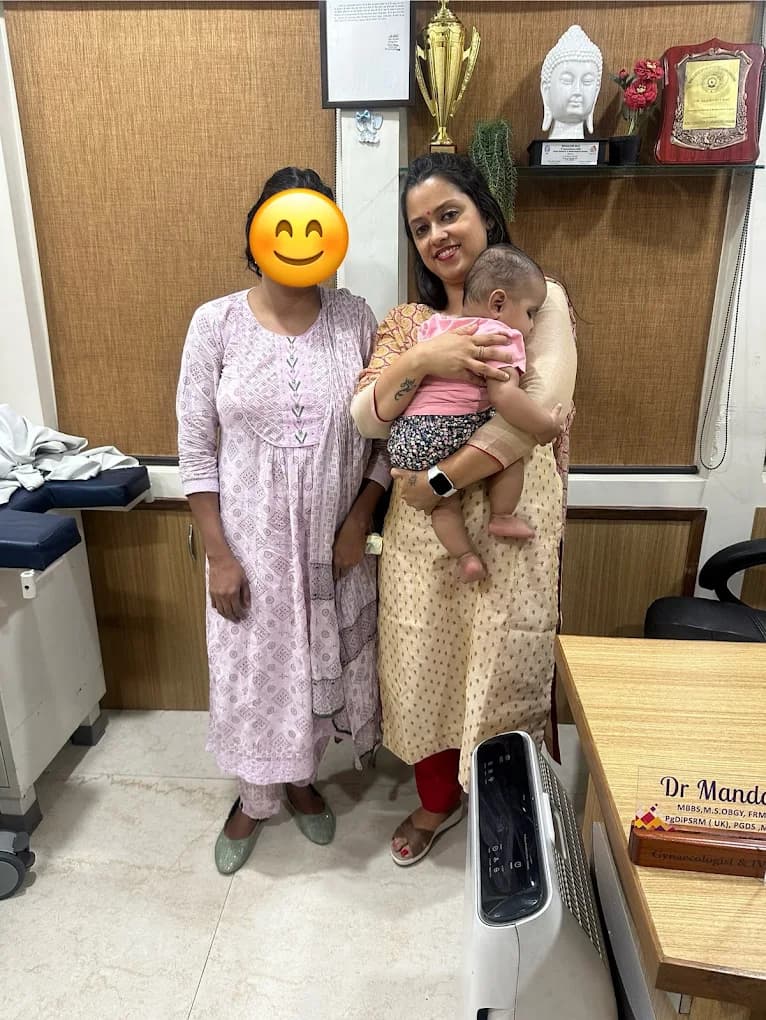
At Divine IVF, Sector 76, Noida, Dr. Mandavi Rai provides comprehensive fertility evaluation for women, including ovarian reserve testing, ultrasound assessment, and hormonal evaluation, to help guide an appropriate, personalised treatment plan.
How it works
Step 1 – Detailed History
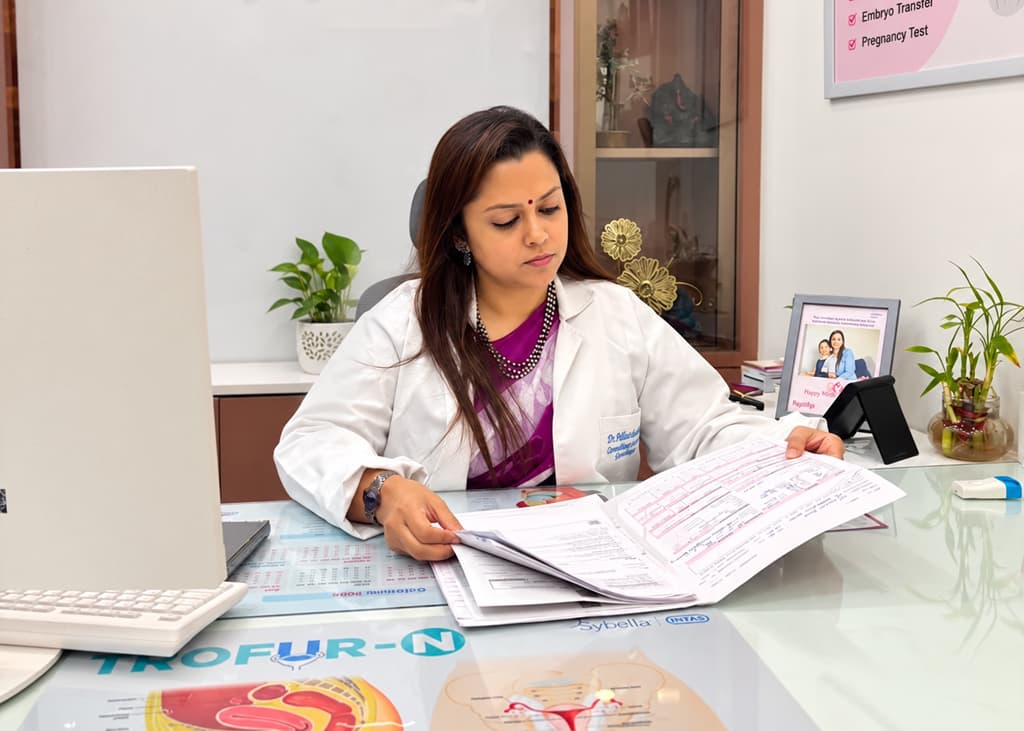
Your doctor reviews your menstrual history, previous pregnancies, medical and surgical history, and any prior fertility investigations.
Step 2 – Ovarian Reserve Testing
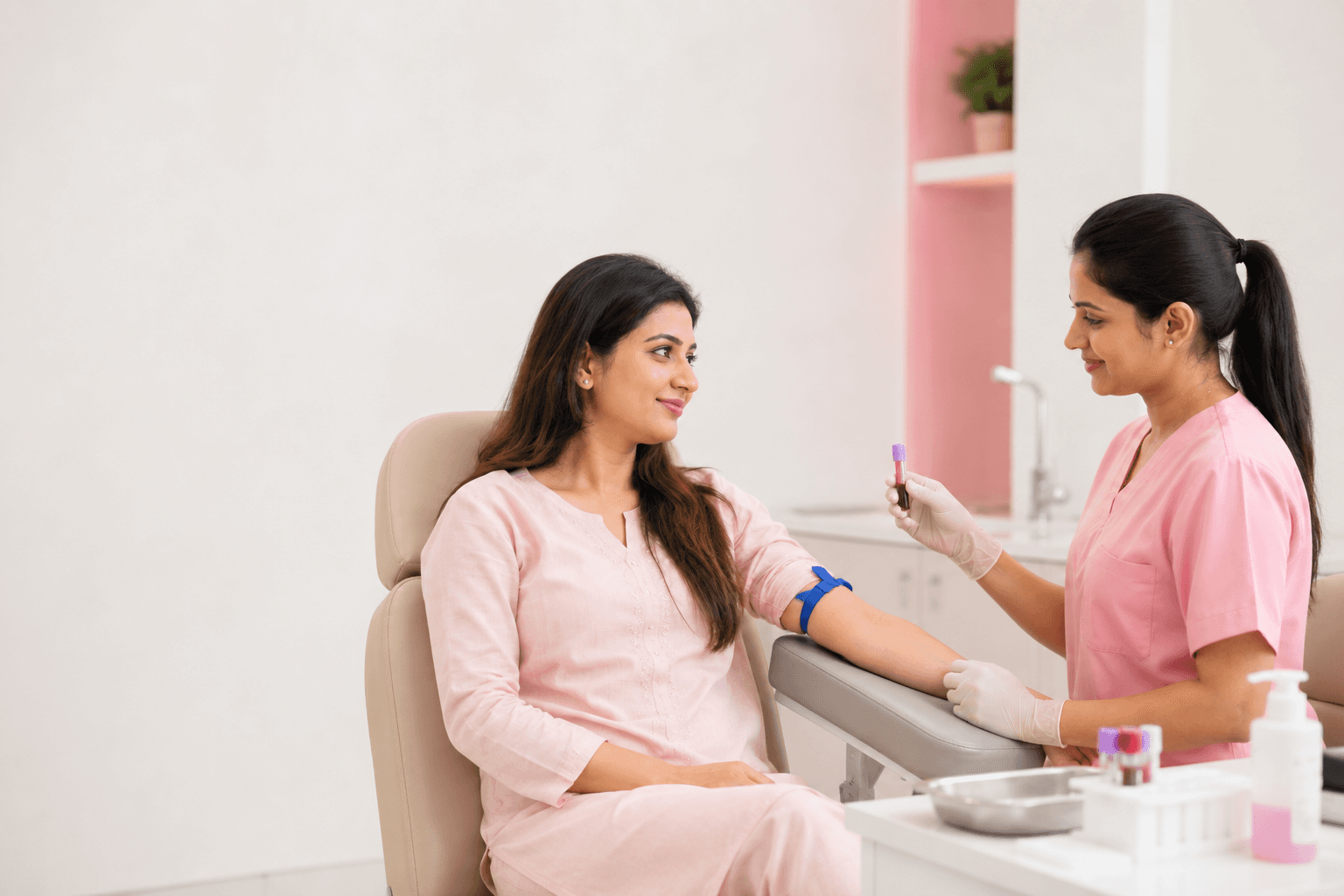
Blood tests such as AMH, along with an antral follicle count on ultrasound, help assess egg quantity and reserve.
Step 3 – Ultrasound Assessment
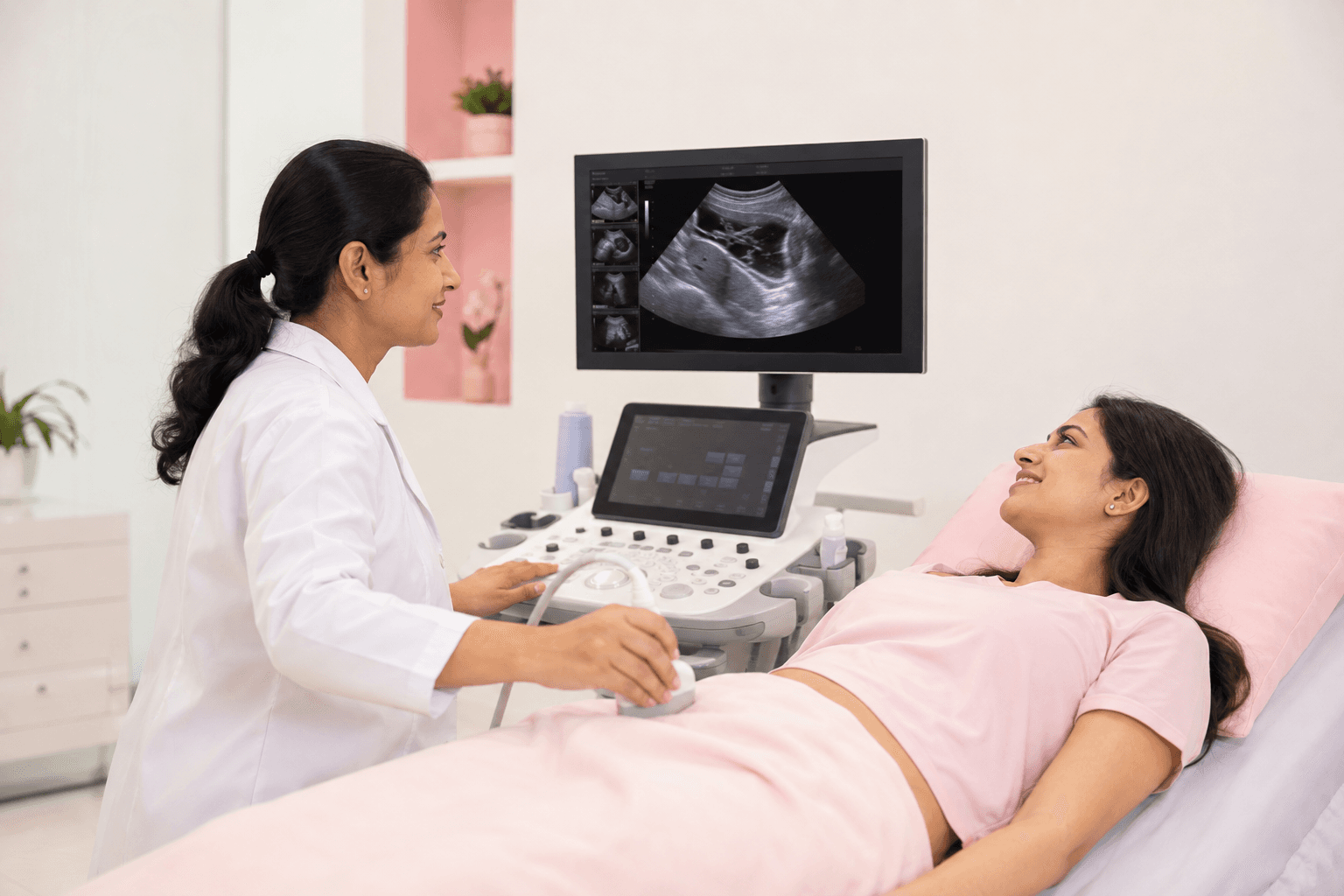
A pelvic ultrasound evaluates the uterus, ovaries, and follicular development, and can help detect conditions such as fibroids, cysts, or PCOS.
Step 4 – Tubal and Uterine Evaluation
Further tests, such as an HSG or sonohysterography, may be advised to assess fallopian tube patency and uterine cavity shape.
Step 5 – Personalised Treatment Plan
Based on findings, your doctor discusses options ranging from lifestyle guidance and ovulation induction to IUI or IVF, depending on the underlying cause.
Benefits
- Identifies specific female fertility factors that may be contributing to difficulty conceiving
- Helps guide the most appropriate treatment pathway, from lifestyle changes to IUI or IVF
- Detects underlying conditions such as PCOS, endometriosis, or tubal blockage that may need targeted treatment
- Supports timely intervention, particularly important given the impact of age on fertility
- Provides a clear, evidence-based basis for shared decision-making with your partner
Things to know
- Some tests are time-sensitive and need to be performed on specific days of the menstrual cycle
- A single test result does not always provide the complete picture — several tests are often considered together
- Findings should be interpreted alongside the male partner`s evaluation for a complete fertility assessment
- Some causes of female infertility, such as diminished ovarian reserve, cannot be reversed but can still be managed with appropriate treatment
- Underlying conditions may require referral for surgical evaluation in select cases
Getting ready
Track your menstrual cycle length and any irregularities before your consultation, as this helps guide initial evaluation.
Bring any previous fertility test results, ultrasound reports, or treatment records you may have.
Certain hormonal blood tests are timed to specific days of your menstrual cycle — the clinic will advise on scheduling.
What to expect
Initial female fertility evaluation typically involves a detailed consultation, blood tests, and a pelvic ultrasound — all of which are generally straightforward and well tolerated. Further tests such as HSG may cause mild, temporary discomfort. Your doctor will explain each test and its purpose, and results are usually reviewed together to form a complete picture before recommending treatment.
Female Infertility Treatment in Noida
Comprehensive evaluation and personalised treatment planning for female fertility factors at Divine IVF, Noida.
📍 Sector 76, Noida, Uttar Pradesh
📞 Call: +91 7678451808
Common Causes of Female Infertility
Ovulation Disorders
Conditions such as PCOS or hormonal imbalances can prevent regular ovulation, reducing the chances of natural conception.
Fallopian Tube Blockage
Blocked or damaged fallopian tubes can prevent sperm from reaching the egg or prevent a fertilised egg from reaching the uterus.
Uterine Abnormalities
Fibroids, polyps, or structural abnormalities of the uterus may affect implantation or pregnancy.
Endometriosis
A condition in which tissue similar to the uterine lining grows outside the uterus, which may affect fertility in some women.
Diminished Ovarian Reserve
A reduced number or quality of remaining eggs, which may occur with age or certain medical conditions.
Hormonal Imbalances
Thyroid disorders, elevated prolactin, and other hormonal conditions can interfere with ovulation and fertility.
Signs That May Warrant Fertility Evaluation
Several signs and symptoms may suggest the need for female fertility evaluation, including:
Absence of symptoms does not rule out a fertility issue, so evaluation is still valuable even without obvious signs.
When Should You Consider Fertility Testing?
You may consider female fertility evaluation if:
Fertility testing is most informative when performed as part of a complete evaluation for both partners.
Female Fertility Tests in Noida
Depending on your history and initial findings, your doctor may recommend some or all of the following tests:
Hormonal Blood Tests
Tests such as FSH, LH, AMH, thyroid function, and prolactin help assess ovarian reserve and hormonal balance.
Pelvic Ultrasound
Evaluates the ovaries, uterus, and antral follicle count, and can help detect conditions such as fibroids, cysts, or PCOS.
Hysterosalpingography (HSG)
An X-ray-based test used to assess whether the fallopian tubes are open and the uterine cavity is normal.
Sonohysterography
An ultrasound-based test that can help evaluate the uterine cavity in more detail.
Ovulation Tracking
Blood tests or ultrasound monitoring to confirm whether and when ovulation is occurring.
Female Infertility Treatment Options
Treatment is tailored to the specific cause identified during evaluation.
Lifestyle and Medical Guidance
Weight management, nutrition, and other lifestyle factors may be discussed as part of an overall treatment plan.
Ovulation Induction
Medication to stimulate regular ovulation, often used as a first step for ovulation-related infertility.
IUI
Intrauterine insemination may be suitable for select causes of mild female-factor or unexplained infertility.
IVF/ICSI
Considered for tubal blockage, more complex female fertility factors, or when other treatments have not been successful.
Surgical Treatment
Procedures such as laparoscopy or hysteroscopy may be recommended for conditions like fibroids, endometriosis, or uterine abnormalities.
Benefits of Female Fertility Evaluation
- ✓ Identifies the Underlying CauseHelps determine which specific factor may be contributing to difficulty conceiving.
- ✓ Guides Appropriate TreatmentSupports selection of the most suitable treatment pathway based on actual findings.
- ✓ Detects Treatable ConditionsCan uncover conditions such as PCOS, fibroids, or tubal blockage that may respond well to targeted treatment.
- ✓ Supports Timely Decision-MakingEarlier evaluation allows more time to consider treatment options, which can be valuable given the impact of age on fertility.
If you have been trying to conceive without success, a detailed female fertility evaluation with Dr. Mandavi Rai at Divine IVF, Noida can help identify next steps.
Book Female Fertility ConsultationResources
Common questions
Common causes include ovulation disorders, PCOS, fallopian tube blockage, endometriosis, uterine abnormalities, and age-related decline in egg quantity and quality.
Women under 35 are generally advised to seek evaluation after a year of trying without success, while women over 35 may consider evaluation after six months.
Common tests include hormonal blood work, ovarian reserve testing (AMH), pelvic ultrasound, and tubal assessment such as HSG when indicated.
Irregular periods can indicate an ovulation disorder such as PCOS, which may affect fertility, and should be evaluated by a fertility specialist.
Many causes of female infertility can be managed or treated, though the approach depends on the specific underlying cause and its severity.
Yes, egg quantity and quality generally decline with age, particularly after the mid-30s, which can affect natural conception and treatment success.
Ovarian reserve refers to the quantity of eggs remaining in the ovaries, commonly assessed through AMH blood testing and antral follicle count on ultrasound.
In some cases, lifestyle factors such as weight management, diet, and stress reduction can support fertility, though this varies by underlying cause.
Treatment options range from ovulation induction and IUI to IVF, depending on the diagnosis and severity of the underlying condition.
Cost depends on which tests are required. Book a consultation for a personalised evaluation plan and estimate.
Ready to talk to Dr. Mandavi Rai?
Bring your questions, your history, and your pace — we`ll build the next step together.