
ICSI Treatment in Noida Advanced fertility treatment for selected cases of male-factor infertility and fertilisation problems
If you are facing difficulty conceiving because of severe male infertility, low sperm count, poor sperm motility, previous fertilisation failure, or other fertility concerns, ICSI treatment in Noida may be considered as part of an IVF cycle.
What is ICSI Treatment?
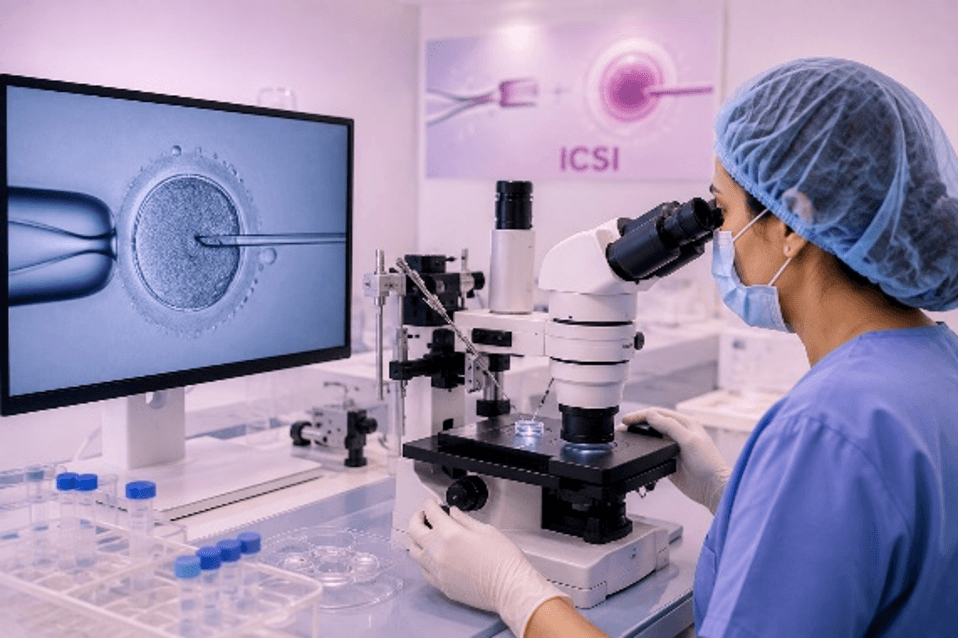
ICSI stands for Intracytoplasmic Sperm Injection. ICSI is an assisted fertilisation technique used during IVF treatment. In conventional IVF, eggs and sperm are placed together in a laboratory environment and fertilisation is allowed to occur. In ICSI, an embryologist selects a sperm and injects it directly into a mature egg using specialised laboratory equipment.
This technique can help overcome certain barriers to fertilisation, particularly in cases involving male-factor infertility. ICSI is not a completely separate fertility treatment from IVF — it is a specialised fertilisation method used as part of an IVF cycle.
At Divine IVF, Sector 76, Noida, Dr. Mandavi Rai provides personalised fertility evaluation and treatment planning for couples who may benefit from ICSI. The decision to use ICSI is based on the couple's fertility history, semen analysis, ovarian reserve, previous IVF outcomes, and other clinical findings.
How it works
Step 1 – Fertility Consultation
Treatment begins with a detailed fertility consultation reviewing duration of infertility, female age, ovarian reserve, previous pregnancies, previous IVF or IUI cycles, semen analysis, male fertility history, and medical and surgical history.
Step 2 – Ovarian Stimulation
Fertility medicines stimulate the ovaries so multiple follicles can develop. Response is monitored through ultrasound scans and hormonal blood tests.
Step 3 – Trigger Injection
When follicles reach an appropriate stage, a trigger injection is administered to support final egg maturation. Egg retrieval is then scheduled.
Step 4 – Egg Retrieval
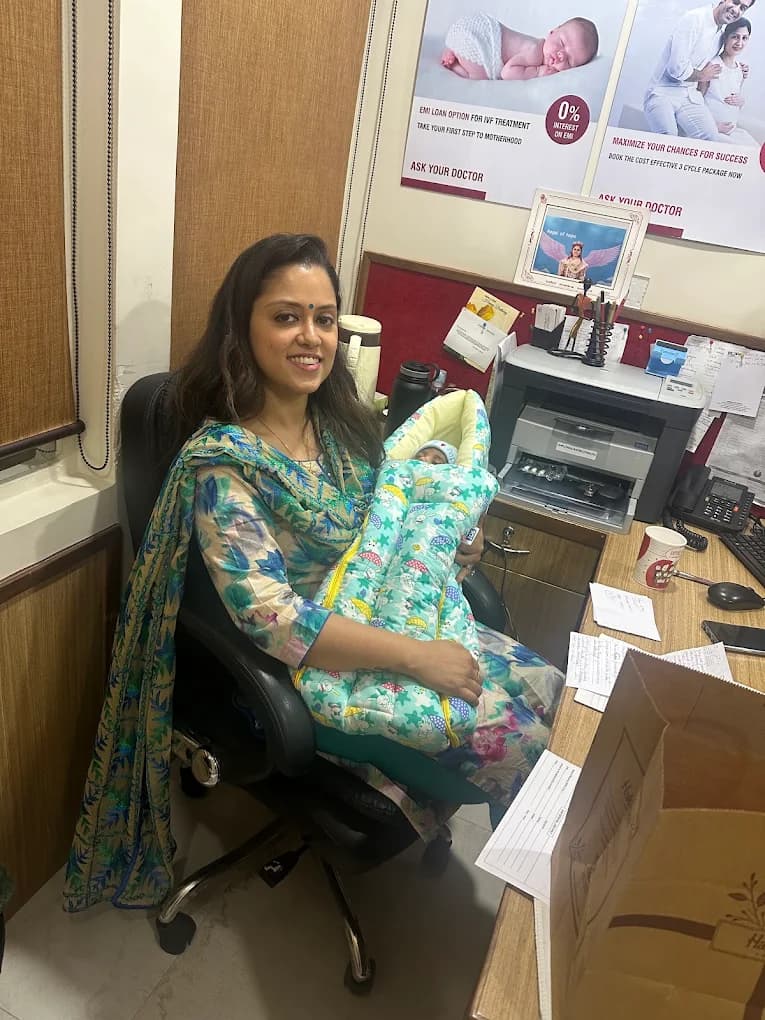
Egg retrieval is performed using ultrasound guidance. Eggs are collected from the ovaries and transferred to the embryology laboratory under sedation or anaesthesia.
Step 5 – Semen Collection or Sperm Retrieval
A semen sample is collected on the day of egg retrieval. If sperm are not available in the ejaculate, surgically retrieved sperm may be used in selected cases.
Step 6 – Sperm Selection
An embryologist examines the prepared sperm sample and selects suitable sperm for the ICSI procedure based on laboratory assessment.
Step 7 – Intracytoplasmic Sperm Injection
A single selected sperm is carefully injected directly into a mature egg using specialised micromanipulation equipment.
Step 8 – Fertilisation Check
After ICSI, eggs are monitored to determine whether fertilisation has occurred. Not every injected egg will necessarily fertilise.
Step 9 – Embryo Development
Fertilised eggs are cultured in the embryology laboratory and monitored over the following days for embryo development.
Step 10 – Embryo Transfer
A selected embryo or embryos may be transferred into the uterus. In some cases, embryos may instead be frozen for transfer in a later cycle.
Step 11 – Pregnancy Test
A pregnancy test is performed after the embryo transfer according to your doctor's instructions.
Benefits
- Helps with severe male-factor infertility — may allow fertilisation when sperm count or motility is severely reduced
- Direct sperm injection — the sperm does not need to penetrate the egg on its own
- Can be used with retrieved sperm — ICSI can be used when sperm are obtained through surgical sperm retrieval procedures
- May help after previous fertilisation failure — couples with previous failed or very low fertilisation may be considered for ICSI
- Uses a small number of sperm — only a limited number of suitable sperm may be required for the injection procedure
- Can be combined with advanced sperm selection techniques like PICSI or IMSI where appropriate
Things to know
- Not every mature egg will fertilise — fertilisation rates typically range from 70-80% of injected eggs
- Not every fertilised egg will develop into a usable embryo
- Pregnancy is not guaranteed
- ICSI does not correct all causes of infertility
- Some couples may require additional fertility evaluation
- Genetic counselling or testing may be advised in certain severe male infertility cases
- ICSI adds to the cost of an IVF cycle due to the specialised laboratory work required
Getting ready
Before IVF with ICSI, investigations may be recommended for both partners. Female fertility tests may include AMH, hormonal testing, ultrasound, antral follicle count, and uterine evaluation. Male fertility tests may include semen analysis, hormonal evaluation, clinical examination, and genetic testing in selected cases.
The ICSI procedure is performed as part of an IVF cycle, so preparation follows the same pathway as standard IVF. This includes ovarian stimulation for the female partner, followed by egg retrieval when follicles are mature.
For the male partner, a fresh semen sample is typically provided on the day of egg retrieval. If sperm retrieval is needed (for azoospermia), this is performed as a separate procedure before the IVF cycle begins.
What to expect
The ICSI procedure itself happens entirely in the embryology lab — you won't feel anything during the injection process. Your experience will be the same as a standard IVF cycle, with the difference occurring at the fertilisation stage. You'll be informed the day after egg retrieval how many eggs have fertilised normally, with updates on embryo development over the following days. ICSI can assist fertilisation, but it does not guarantee fertilisation of every egg, embryo development, implantation, pregnancy, or live birth.
ICSI Treatment in Noida
Advanced fertility treatment for selected cases of male-factor infertility and fertilisation problems.
📍 Sector 76, Noida, Uttar Pradesh
📞 Call: +91 7678451808

What Is ICSI Treatment?
ICSI stands for Intracytoplasmic Sperm Injection.
ICSI is an assisted fertilisation technique used during IVF treatment.
In conventional IVF, eggs and sperm are placed together in a laboratory environment and fertilisation is allowed to occur.
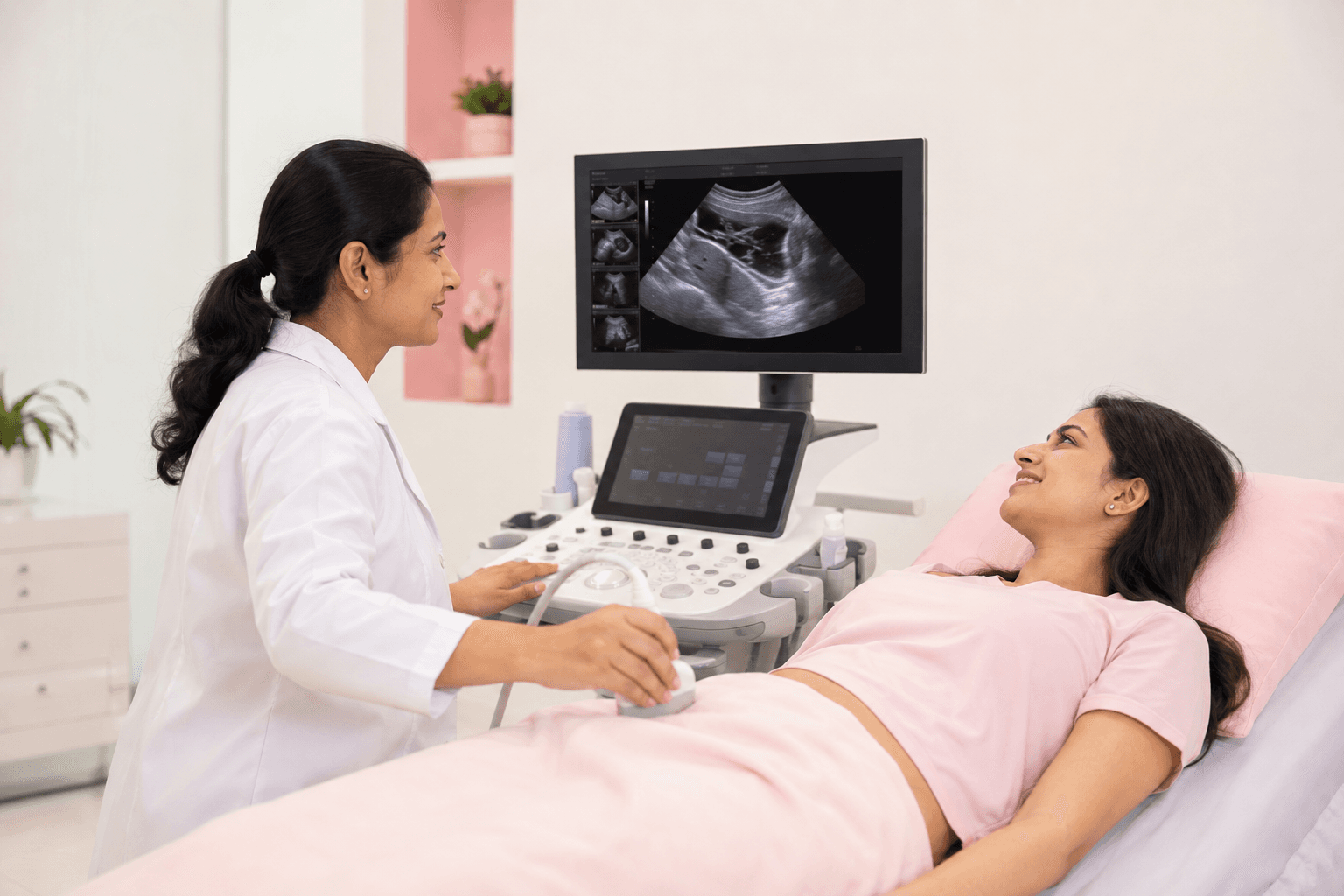
In ICSI, an embryologist selects a sperm and injects it directly into a mature egg using specialised laboratory equipment.
This technique can help overcome certain barriers to fertilisation, particularly in cases involving male-factor infertility.
How Is ICSI Different From IVF?
ICSI is not a completely separate fertility treatment from IVF. It is a specialised fertilisation method used as part of an IVF cycle.
In Conventional IVF
- • Eggs are retrieved from the ovaries
- • Sperm and eggs are placed together in the laboratory
- • Sperm must penetrate the egg naturally
- • Fertilised eggs are then monitored for embryo development
In IVF With ICSI
- • Eggs are retrieved in the same way
- • A sperm is selected by an embryologist
- • The sperm is injected directly into a mature egg
- • Fertilised eggs are monitored for embryo development
The main difference is therefore the method of fertilisation.
Who May Need ICSI Treatment?
ICSI may be recommended in selected fertility cases.
Very Low Sperm Count
If sperm concentration is significantly reduced, there may not be enough sperm to achieve fertilisation through conventional IVF. ICSI may help by injecting a selected sperm directly into the egg.
Poor Sperm Motility
When sperm have difficulty moving effectively, reaching or penetrating an egg may become difficult. ICSI may be considered when sperm motility is significantly reduced.
Abnormal Sperm Morphology
Severe abnormalities in sperm shape may affect the fertilisation process. ICSI may be considered depending on the overall semen analysis and fertility profile.
Azoospermia With Surgically Retrieved Sperm
In certain cases where sperm are not present in the ejaculate, sperm may be retrieved directly from the male reproductive tract or testicular tissue. ICSI is commonly used when surgically retrieved sperm are available.
Previous Fertilisation Failure
If a previous IVF cycle resulted in failed or very low fertilisation, ICSI may be considered in a subsequent cycle.
Limited Number of Eggs
When only a small number of mature eggs are available, the fertility team may consider ICSI depending on the clinical circumstances.
Previously Frozen Sperm
In selected cases where frozen or limited sperm samples are being used, ICSI may be recommended.
Certain Genetic Testing Cycles
ICSI may sometimes be used in IVF cycles involving embryo genetic testing, depending on laboratory protocol and clinical requirements.
Is ICSI Only for Male Infertility?
No. ICSI is commonly associated with male-factor infertility, but it may also be considered in other situations including:
Your fertility specialist and embryology team determine whether ICSI is appropriate.
ICSI Treatment Process at Divine IVF, Noida
Step 1 – Fertility Consultation
Treatment begins with a detailed fertility consultation reviewing duration of infertility, female age, ovarian reserve, previous pregnancies, previous IVF or IUI cycles, semen analysis, male fertility history, and medical and surgical history.
Step 2 – Ovarian Stimulation
Fertility medicines are generally used to stimulate the ovaries so that multiple follicles can develop. The response is monitored through ultrasound scans and hormonal blood tests. Medication doses may be adjusted according to ovarian response.
Step 3 – Trigger Injection
When follicles reach an appropriate stage of development, a trigger injection may be administered to support final egg maturation. Egg retrieval is then scheduled according to the treatment protocol.
Step 4 – Egg Retrieval
Egg retrieval is performed using ultrasound guidance. The eggs are collected from the ovaries and transferred to the embryology laboratory. The procedure is usually performed under sedation or anaesthesia according to clinic protocol.
Step 5 – Semen Collection or Sperm Retrieval
A semen sample is generally collected on the day of egg retrieval. If sperm are not available in the ejaculate, surgically retrieved sperm may be used in selected cases. The sample is processed in the laboratory before ICSI.
Step 6 – Sperm Selection
An embryologist examines the prepared sperm sample and selects suitable sperm for the ICSI procedure. The sperm is selected based on laboratory assessment.
Step 7 – Intracytoplasmic Sperm Injection
A single selected sperm is carefully injected directly into a mature egg. This process is performed using specialised micromanipulation equipment in the embryology laboratory. Each suitable mature egg may be assessed for ICSI according to the treatment plan.
Step 8 – Fertilisation Check
After ICSI, the eggs are monitored to determine whether fertilisation has occurred. Not every injected egg will necessarily fertilise, and fertilisation cannot be guaranteed.
Step 9 – Embryo Development
Fertilised eggs are cultured in the embryology laboratory. Embryologists monitor their development over the following days. The appropriate embryo transfer strategy depends on embryo development, patient age, endometrial preparation, previous treatment history, and clinical recommendations.
Step 10 – Embryo Transfer
A selected embryo or embryos may be transferred into the uterus according to the treatment plan. In some cases, embryos may instead be frozen for transfer in a later cycle.
Step 11 – Pregnancy Test
A pregnancy test is performed after the embryo transfer according to your doctor`s instructions.
ICSI for Specific Conditions
ICSI for Low Sperm Count
ICSI may be useful in selected men with very low sperm concentration. Because a sperm is injected directly into an egg, fertilisation does not depend on a large number of sperm reaching and penetrating the egg. However, the overall treatment outcome still depends on many factors, including egg quality, female age, embryo development, sperm quality, uterine factors, and other fertility conditions.
ICSI for Poor Sperm Motility
Poor sperm motility can make natural fertilisation or conventional IVF more difficult. In ICSI, the embryologist selects sperm from the available sample and injects one directly into the egg. This can help bypass the need for the sperm to swim toward and penetrate the egg on its own.
ICSI for Azoospermia
Azoospermia means that sperm are not detected in the ejaculate. Depending on the cause, sperm may sometimes be retrieved through specialised procedures. If usable sperm are retrieved, they may be used with ICSI. A detailed male fertility evaluation is important before planning treatment.
ICSI With Surgically Retrieved Sperm
In selected cases, sperm may be obtained using sperm retrieval procedures. These may involve retrieval from the epididymis or testicular tissue. The exact procedure depends on the cause of infertility. Retrieved sperm may then be used with ICSI when suitable.
ICSI vs IUI vs Conventional IVF
IUI
- • Prepared sperm placed into the uterus
- • Fertilisation happens naturally inside the body
- • Egg retrieval is not required
- • Suitable for selected mild fertility problems
Conventional IVF
- • Eggs retrieved from the ovaries
- • Sperm and eggs placed together in the lab
- • Sperm must penetrate the egg naturally
- • Suitable when sperm quality is adequate
IVF with ICSI
- • Eggs retrieved from the ovaries
- • A sperm is selected and injected directly into the egg
- • Bypasses natural fertilisation barriers
- • Recommended for severe male-factor infertility
Your fertility specialist will decide which approach is more suitable based on semen parameters and the couple`s fertility history.
ICSI Success Rate
There is no single ICSI success rate that applies to every couple.
ICSI can assist fertilisation, but it does not guarantee:
Treatment outcome may depend on:
It is better to discuss your individual prognosis after a complete fertility evaluation rather than relying on a general success percentage.
Benefits of ICSI Treatment
- ✓ Helps With Severe Male-Factor InfertilityICSI may allow fertilisation to be attempted when sperm count or motility is severely reduced.
- ✓ Direct Sperm InjectionThe sperm does not need to penetrate the egg on its own.
- ✓ Can Be Used With Retrieved SpermICSI can be used when sperm are obtained through certain surgical sperm retrieval procedures.
- ✓ May Help After Previous Fertilisation FailureCouples with previous failed or very low fertilisation may be considered for ICSI.
- ✓ Uses a Small Number of SpermOnly a limited number of suitable sperm may be required for the injection procedure.
Risks and Limitations of ICSI
ICSI is an advanced fertility procedure, but it does not eliminate all fertility-related risks.
Important points include:
Your doctor should explain the expected benefits and limitations based on your individual fertility profile.
ICSI Treatment Cost in Noida
The cost of ICSI treatment in Noida can vary depending on the individual fertility treatment plan. Factors affecting cost may include:
Because ICSI is generally performed as part of IVF, it is important to understand what is included in the quoted treatment package. For an accurate estimate, a personalised fertility consultation is recommended.
Why Choose Divine IVF for ICSI Treatment
- ✓Personalised Fertility Evaluation — The decision to use ICSI is based on the couple`s fertility profile rather than using the same treatment approach for everyone.
- ✓Male and Female Fertility Assessment — Both partners are evaluated when planning fertility treatment.
- ✓IVF and ICSI Treatment Planning — Depending on clinical findings, conventional IVF, ICSI, or other fertility options may be discussed.
- ✓Male Infertility Management — ICSI may be considered for low sperm count, poor motility, azoospermia, and other male-factor fertility problems where clinically appropriate.
- ✓Doctor-Led Fertility Care — Treatment is planned under the guidance of Dr. Mandavi Rai, Gynecologist & IVF Specialist in Noida.
- ✓Convenient Location in Noida — Divine IVF is located in Sector 76, Noida, making fertility consultation accessible for couples from Noida and surrounding areas.
When Should You Consider ICSI?
You may be advised to discuss ICSI if:
Book an ICSI Consultation in Noida
If you have severe male-factor infertility, low sperm count, poor sperm motility, previous IVF fertilisation failure, or have been advised to consider ICSI, a detailed fertility evaluation is the first step. At Divine IVF, Sector 76, Noida, Dr. Mandavi Rai provides personalised IVF and ICSI treatment planning according to the couple`s individual fertility profile.
Divine IVF · Sector 76, Noida, Uttar Pradesh
Resources
Common questions
ICSI stands for Intracytoplasmic Sperm Injection. It is a laboratory technique in which a selected sperm is injected directly into a mature egg.
ICSI is not exactly the same as IVF. It is a fertilisation technique used within an IVF treatment cycle.
ICSI may be recommended for severe male-factor infertility, very low sperm count, poor sperm motility, previous fertilisation failure, azoospermia with retrieved sperm, or other selected fertility conditions.
ICSI is not automatically better than conventional IVF for every patient. The appropriate fertilisation method depends on semen analysis and fertility history.
ICSI may be considered in cases of significantly reduced sperm count because a selected sperm can be injected directly into an egg.
If no sperm are present in the ejaculate, further evaluation is required. In some cases, sperm may be surgically retrieved and used with ICSI.
The embryology laboratory evaluates the available sperm sample and selects sperm for injection based on laboratory assessment.
No. ICSI does not guarantee fertilisation of every mature egg. Typical fertilisation rates are around 70-80% of injected eggs.
The ICSI procedure itself takes place in the laboratory and is not felt by the patient. However, the IVF cycle includes ovarian stimulation and egg retrieval which may involve some discomfort.
ICSI itself does not directly cause twins. The chance of multiple pregnancy is more closely related to the number of embryos transferred.
The total cost depends on IVF cycle charges, medicines, ICSI laboratory fees, investigations, sperm retrieval if required, embryo freezing and other treatment components.
You can consult Dr. Mandavi Rai at Divine IVF, Sector 76, Noida for fertility evaluation and personalised IVF with ICSI treatment planning.
Ready to talk to Dr. Mandavi Rai?
Bring your questions, your history, and your pace — we`ll build the next step together.