
PICSI Treatment in Noida Advanced sperm-selection technique used with ICSI for selected male-factor infertility cases
If male infertility, poor sperm quality, previous fertilisation problems, or unsuccessful IVF-ICSI treatment is affecting your fertility journey, PICSI Treatment in Noida may be discussed in selected cases.
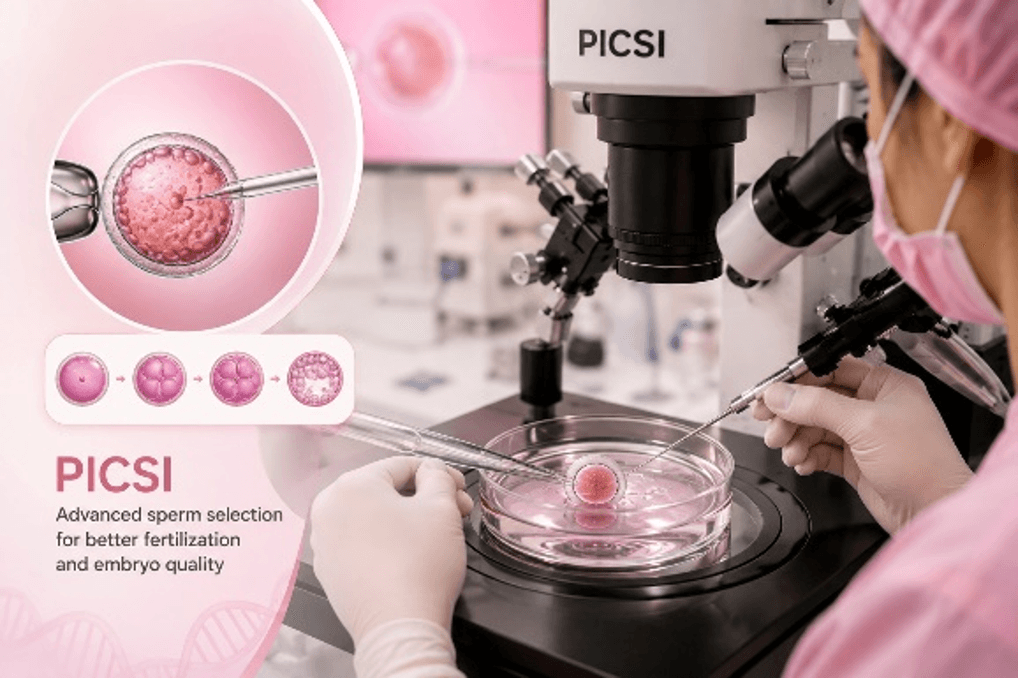
What is PICSI Treatment?
PICSI stands for Physiological Intracytoplasmic Sperm Injection. PICSI is an advanced sperm-selection method used before ICSI.
During PICSI, sperm are exposed to hyaluronic acid (HA), a naturally occurring substance found in the body. Sperm that are able to bind to hyaluronic acid may be selected for use during the ICSI procedure.
The selected sperm is then injected directly into a mature egg. PICSI therefore does not replace IVF or ICSI. It is an additional sperm-selection step that may be used during an IVF-ICSI cycle.
At Divine IVF, Sector 76, Noida, Dr. Mandavi Rai provides personalised fertility evaluation and advanced IVF-ICSI treatment planning. PICSI is not required for every IVF patient and should be considered only after reviewing semen analysis, previous treatment outcomes, female fertility factors and the available scientific evidence.
How it works
Step 1 – Fertility Consultation
The treatment journey begins with a detailed fertility consultation reviewing duration of infertility, previous pregnancies, previous IVF cycles, previous ICSI outcomes, female age, ovarian reserve, male fertility history, semen analysis, and fertilisation history.
Step 2 – Female Fertility Evaluation
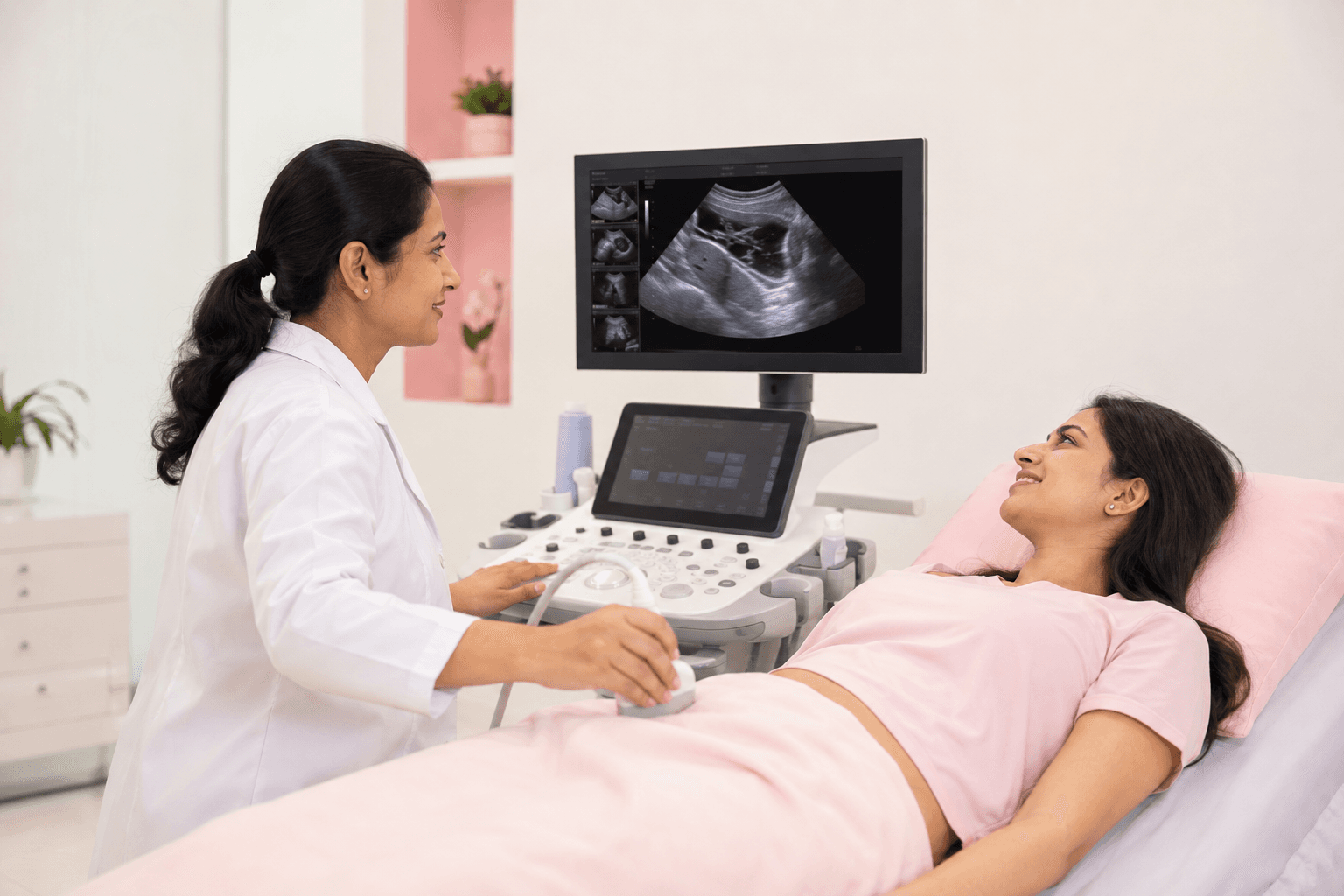
The female partner may undergo investigations such as AMH, hormonal tests, pelvic ultrasound, antral follicle count, uterine assessment, and additional fertility tests where required.
Step 3 – Male Fertility Evaluation
Male fertility testing may include semen analysis, sperm concentration, motility, morphology, hormonal tests when clinically indicated, and additional investigations where required.
Step 4 – IVF Ovarian Stimulation
The female partner receives fertility medication to stimulate the ovaries. Follicular development is monitored through ultrasound and, where needed, hormonal testing.
Step 5 – Egg Retrieval
When follicles are appropriately developed, eggs are collected through an ultrasound-guided egg retrieval procedure and transferred to the embryology laboratory.
Step 6 – Semen Preparation
A semen sample is collected and processed. Laboratory preparation helps isolate sperm that may be suitable for fertilisation.
Step 7 – PICSI Sperm Selection
Prepared sperm are exposed to a hyaluronic-acid-containing medium. Sperm capable of binding to the HA surface may be identified and selected.
Step 8 – ICSI Procedure
A selected sperm is injected directly into a mature egg using ICSI.
Step 9 – Fertilisation Check
The eggs are checked after injection to determine whether fertilisation has occurred. Not every injected egg will necessarily fertilise.
Step 10 – Embryo Development
Fertilised eggs are cultured in the embryology laboratory. Embryologists monitor development over the following days.
Step 11 – Embryo Transfer or Freezing
Depending on the IVF plan, a suitable embryo may be transferred or frozen for a later frozen embryo transfer cycle.
Step 12 – Pregnancy Test
A pregnancy test is performed after embryo transfer according to your fertility specialist's instructions.
Benefits
- Additional Sperm-Selection Method — HA binding provides another biological characteristic by which sperm can be selected
- Used Within ICSI — Selected sperm can be directly injected into an egg
- Non-Invasive Sperm Selection — The selection step is performed on the semen sample in the laboratory
- May Be Discussed in Selected Male-Factor Cases — The technique can be considered individually where an embryologist or fertility specialist believes additional sperm selection may be relevant
- Selects sperm with better DNA integrity and lower DNA fragmentation in selected cases
- May improve fertilisation rates and embryo quality in specific patient populations
Things to know
- Not required for every IVF patient
- Does not guarantee fertilisation
- Does not guarantee better embryos
- Does not guarantee implantation
- Does not guarantee pregnancy
- Has not been shown to routinely improve live-birth outcomes over standard ICSI
- Should not replace proper male and female fertility evaluation
- Adds to the cost of an IVF cycle due to the specialised dish and additional lab work
Getting ready
No separate preparation is needed beyond your standard IVF cycle — PICSI is a lab-stage decision made on the day of egg retrieval, based on your semen analysis and history reviewed beforehand.
Before treatment, the female partner may undergo investigations such as AMH, hormonal tests, pelvic ultrasound, antral follicle count, uterine assessment, and additional fertility tests where required. Male fertility testing may include semen analysis, sperm concentration, motility, morphology, hormonal tests when clinically indicated, and additional investigations where required.
If DNA fragmentation testing hasn't already been done and is relevant to your case, Dr. Rai may recommend it ahead of your cycle to help decide whether PICSI is worth considering.
The rest of your IVF cycle — including ovarian stimulation and egg retrieval — proceeds exactly as with standard IVF. The PICSI selection happens entirely in the embryology lab after egg retrieval.
What to expect
PICSI takes place entirely at the lab stage of an IVF cycle — the rest of your treatment (stimulation, egg retrieval, embryo transfer) proceeds as with standard IVF or ICSI. You won't notice any difference in your experience, as the selection happens behind the scenes in the embryology lab. The key difference is in the precision of sperm selection, which may improve embryo development and pregnancy outcomes in specific cases. However, this selection method does not guarantee that every egg will fertilise, embryos will develop normally, implantation will occur, pregnancy will occur, or a live birth will result.
PICSI Treatment in Noida
Advanced sperm-selection technique used with ICSI for selected male-factor infertility cases.
📍 Sector 76, Noida, Uttar Pradesh
📞 Call: +91 7678451808

What Is PICSI?
PICSI stands for Physiological Intracytoplasmic Sperm Injection.
PICSI is an advanced sperm-selection method used before ICSI.
During PICSI, sperm are exposed to hyaluronic acid (HA), a naturally occurring substance found in the body.
Sperm that are able to bind to hyaluronic acid may be selected for use during the ICSI procedure.
The selected sperm is then injected directly into a mature egg.
PICSI therefore does not replace IVF or ICSI. It is an additional sperm-selection step that may be used during an IVF-ICSI cycle.
How Does PICSI Work?
The PICSI process generally involves:
- Semen sample collection
- Laboratory preparation of sperm
- Exposure of sperm to hyaluronic acid
- Identification of sperm that bind to HA
- Selection of suitable sperm
- Injection of the selected sperm into a mature egg through ICSI
- Fertilisation monitoring
- Embryo culture
- Embryo transfer or freezing according to the treatment plan
What Is Hyaluronic Acid Sperm Selection?
Hyaluronic acid is naturally present in the reproductive environment. PICSI uses the ability of certain sperm to bind to hyaluronic acid as one method of sperm selection.
Sperm that demonstrate HA binding are selected for ICSI.
However, this selection method does not guarantee that:
- Every egg will fertilise
- Embryos will develop normally
- Implantation will occur
- Pregnancy will occur
- A live birth will result
PICSI vs ICSI – What Is the Difference?
PICSI and ICSI are closely related but are not exactly the same.
ICSI
During standard ICSI:
- Sperm are prepared in the laboratory
- An embryologist selects a suitable sperm
- The sperm is injected directly into a mature egg
PICSI
During PICSI:
- Sperm are exposed to hyaluronic acid
- Sperm capable of binding to HA are identified
- A selected HA-binding sperm is used for ICSI
The main difference is therefore the sperm-selection method before injection.
Is PICSI Better Than ICSI?
PICSI should not automatically be considered better than standard ICSI.
Available evidence has not demonstrated that PICSI routinely increases the chance of having a baby compared with standard ICSI for male-factor infertility.
For many patients, standard ICSI remains an appropriate fertilisation technique. PICSI may be discussed only in selected circumstances after counselling about its potential benefits and limitations.
Who May Discuss PICSI Treatment?
PICSI may be discussed in selected IVF-ICSI cases involving male fertility concerns.
Male-Factor Infertility
Men with significant sperm abnormalities may already require ICSI. PICSI may occasionally be discussed as an additional sperm-selection method.
Poor Sperm Quality
If semen analysis shows issues involving sperm quality, the fertility and embryology teams may review available sperm-selection options.
Previous Fertilisation Problems
Patients who have experienced poor or failed fertilisation during a previous IVF-ICSI cycle may have the overall treatment reviewed. PICSI may be discussed as one possible laboratory option, although other factors also need evaluation.
Previous Unsuccessful ICSI
After an unsuccessful ICSI cycle, the fertility team should assess egg quality, sperm quality, fertilisation, embryo development, female age, ovarian reserve, uterine factors, and laboratory factors. PICSI should not automatically be added without identifying a possible reason for previous treatment failure.
Is PICSI Only for Male Infertility?
PICSI has mainly been studied in patients undergoing ICSI for male-factor infertility. It is not generally considered a routine treatment for patients without a sperm-related indication. The decision should depend on individual fertility findings.

PICSI vs Other Techniques
PICSI vs IMSI
PICSI and IMSI are different sperm-selection techniques. PICSI selects sperm according to their ability to bind with hyaluronic acid. IMSI uses very high magnification to evaluate sperm morphology in greater detail before ICSI. Neither sperm-selection add-on should automatically be assumed to improve IVF live-birth outcomes. The appropriate approach depends on individual circumstances.
PICSI vs Conventional IVF
Conventional IVF
Sperm and eggs are placed together in the laboratory and sperm must penetrate the egg without direct injection.
PICSI With ICSI
Sperm are first selected using HA binding and then injected directly into the egg through ICSI. PICSI is therefore relevant only when ICSI is being performed.
PICSI for Specific Conditions
PICSI for Low Sperm Count
PICSI may be discussed in some male infertility cases involving low sperm count, but low sperm count alone does not automatically indicate PICSI. Treatment planning also considers motility, morphology, total usable sperm, previous fertilisation results, and female fertility factors. Severe low sperm count may primarily lead to consideration of ICSI rather than PICSI specifically.
PICSI for Poor Sperm Motility
Poor motility may make natural fertilisation more difficult. When ICSI is planned, the embryology team selects sperm for injection. PICSI may be considered as an additional selection method in certain situations, but it is not routinely necessary.
PICSI for Poor Sperm Morphology
Men with abnormal sperm morphology may undergo ICSI depending on the severity of male-factor infertility. PICSI selects sperm based on HA binding rather than detailed visual morphology. If advanced morphology-based sperm selection is being considered, techniques such as IMSI are conceptually different.
PICSI After Failed ICSI
A failed ICSI cycle can occur for many reasons. These include egg quality, sperm-related factors, oocyte maturity, fertilisation problems, embryo development, chromosomal factors, female age, and laboratory factors. PICSI may occasionally be discussed after unsuccessful treatment, but the entire cycle should first be reviewed.
Can PICSI Reduce Miscarriage?
Some research has suggested a possible reduction in miscarriage in certain ICSI patients, but the evidence is not currently strong enough to confirm this benefit for all patients.
PICSI should therefore not be advertised as a proven miscarriage-prevention treatment.
Does PICSI Improve IVF Success Rate?
There is currently no good evidence that PICSI routinely improves the chance of having a baby compared with standard ICSI for male-factor infertility.
PICSI should therefore be presented as a sperm-selection add-on, not a guaranteed IVF-success technique.
Benefits and Limitations of PICSI
Benefits Proposed for PICSI
Possible reasons PICSI may be considered include:
- Additional Sperm-Selection Method — HA binding provides another biological characteristic by which sperm can be selected
- Used Within ICSI — Selected sperm can be directly injected into an egg
- Non-Invasive Sperm Selection — The selection step is performed on the semen sample in the laboratory
- May Be Discussed in Selected Male-Factor Cases — The technique can be considered individually where an embryologist or fertility specialist believes additional sperm selection may be relevant
Limitations of PICSI
PICSI has important limitations. It:
- Is not required for every IVF patient
- Does not guarantee fertilisation
- Does not guarantee better embryos
- Does not guarantee implantation
- Does not guarantee pregnancy
- Has not been shown to routinely improve live-birth outcomes over standard ICSI
- Should not replace proper male and female fertility evaluation
Is PICSI Safe?
PICSI is performed on the semen sample as an additional laboratory selection step before ICSI. The patient does not undergo an additional invasive procedure specifically for PICSI.
However, the overall IVF-ICSI cycle still carries the usual risks and considerations associated with assisted reproductive treatment.
PICSI Treatment Cost in Noida
The PICSI treatment cost in Noida depends on the overall IVF-ICSI treatment plan. Costs may include:
Since PICSI is an additional laboratory technique used with ICSI, it may involve an additional charge beyond the standard IVF-ICSI package. Patients should ask whether PICSI is medically justified for their individual case before choosing an additional paid treatment add-on.
Questions to Ask Before Choosing PICSI
Before choosing PICSI, consider asking:
Why Choose Divine IVF for PICSI Treatment Planning
- ✓Personalised Fertility Evaluation — Advanced laboratory techniques are considered according to the couple`s fertility profile.
- ✓Male Fertility Assessment — Semen analysis and male-factor infertility are evaluated before selecting fertilisation techniques.
- ✓IVF and ICSI Treatment Planning — PICSI is considered within a complete IVF-ICSI treatment strategy rather than as an isolated procedure.
- ✓Advanced Sperm Selection Options — Where clinically appropriate, advanced sperm-selection approaches can be discussed based on individual findings.
- ✓Doctor-Led Fertility Care — Fertility treatment planning is provided under the guidance of Dr. Mandavi Rai, Gynecologist & IVF Specialist in Noida.
- ✓Convenient Location in Sector 76, Noida — Divine IVF is located in Sector 76, Noida, for patients seeking advanced fertility and IVF treatment in Noida.
Book a PICSI Consultation in Noida
If you have male-factor infertility, previous fertilisation problems or unsuccessful IVF-ICSI treatment and want to understand whether advanced sperm selection may be relevant, a detailed fertility assessment is the first step. At Divine IVF, Sector 76, Noida, Dr. Mandavi Rai provides personalised fertility evaluation and IVF-ICSI treatment planning based on your individual reproductive history.
Divine IVF · Sector 76, Noida, Uttar Pradesh
Resources
Common questions
PICSI stands for Physiological Intracytoplasmic Sperm Injection.
PICSI is a sperm-selection technique in which sperm are exposed to hyaluronic acid. Sperm that bind to HA may be selected for use in ICSI.
No. ICSI is the procedure in which sperm is injected directly into an egg. PICSI is an additional sperm-selection method performed before ICSI.
PICSI selects sperm based on hyaluronic-acid binding, whereas IMSI selects sperm using very high magnification to evaluate morphology.
PICSI may be discussed in selected patients undergoing ICSI for male-factor infertility or previous fertilisation concerns, although routine benefit has not been proven.
Not routinely. Current evidence has not shown that PICSI increases live-birth rates compared with standard ICSI for male-factor infertility.
Low sperm count may be an indication for ICSI in certain cases, but it does not automatically mean PICSI is required.
PICSI selects sperm based on HA binding rather than morphology alone. Whether it is useful depends on the individual fertility situation.
Some research has suggested a possible effect, but evidence is insufficient to confirm that PICSI reliably reduces miscarriage.
No. Embryo development depends on both sperm and egg factors and many other biological variables.
Current evidence does not show a routine live-birth advantage over standard ICSI.
PICSI itself is a laboratory procedure performed on the sperm sample, so there is no separate invasive procedure for the patient.
The total cost depends on the IVF-ICSI package, laboratory charges, medicines, investigations and any additional procedures required.
You can consult Dr. Mandavi Rai at Divine IVF, Sector 76, Noida for fertility evaluation and personalised IVF-ICSI treatment planning.
Ready to talk to Dr. Mandavi Rai?
Bring your questions, your history, and your pace — we`ll build the next step together.