
PRP for Fertility in Noida Ovarian PRP for low ovarian reserve and intrauterine PRP for thin endometrium
If you have low ovarian reserve, poor ovarian response, premature ovarian insufficiency, thin endometrium, or recurrent implantation failure, you may have come across Platelet-Rich Plasma (PRP) therapy while researching fertility treatment options.
What is PRP for Fertility?
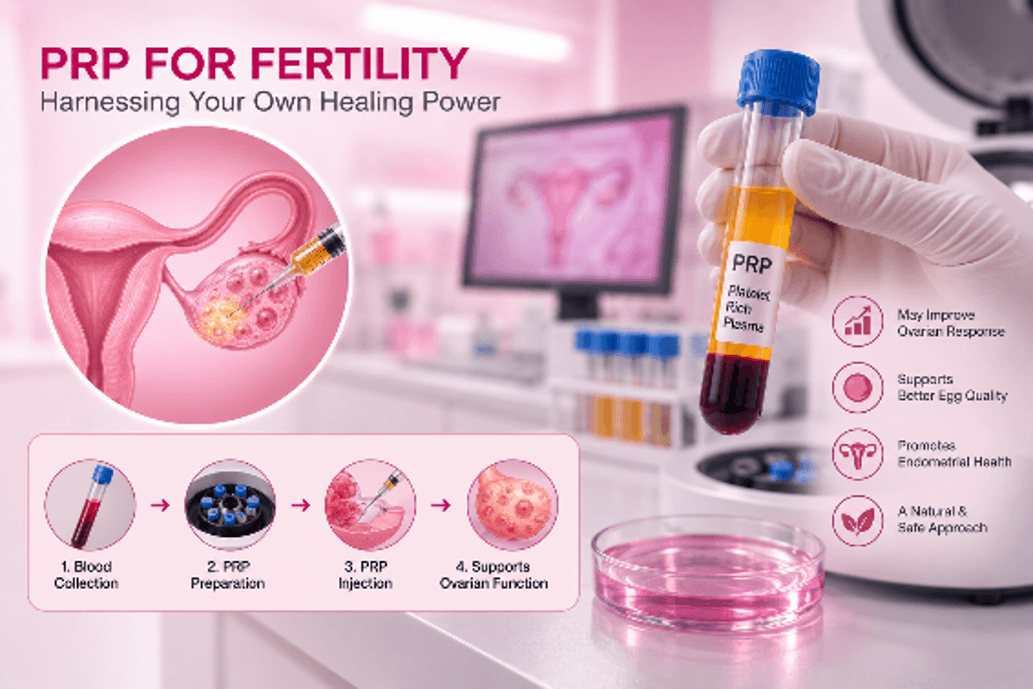
PRP stands for Platelet-Rich Plasma. It is an autologous therapy prepared from your own blood sample, which is processed to concentrate platelets that contain growth factors and bioactive proteins.
In fertility care, PRP has been explored in specific, individually evaluated contexts. It is not a routine fertility treatment and its routine benefit for improving pregnancy or live-birth outcomes remains uncertain.
At Divine IVF, Sector 76, Noida, Dr. Mandavi Rai provides personalised fertility evaluation for diminished ovarian reserve, poor ovarian response, thin endometrium and implantation concerns, including evidence-based counselling regarding PRP fertility treatment add-ons.
How it works
Step 1 – Blood Draw
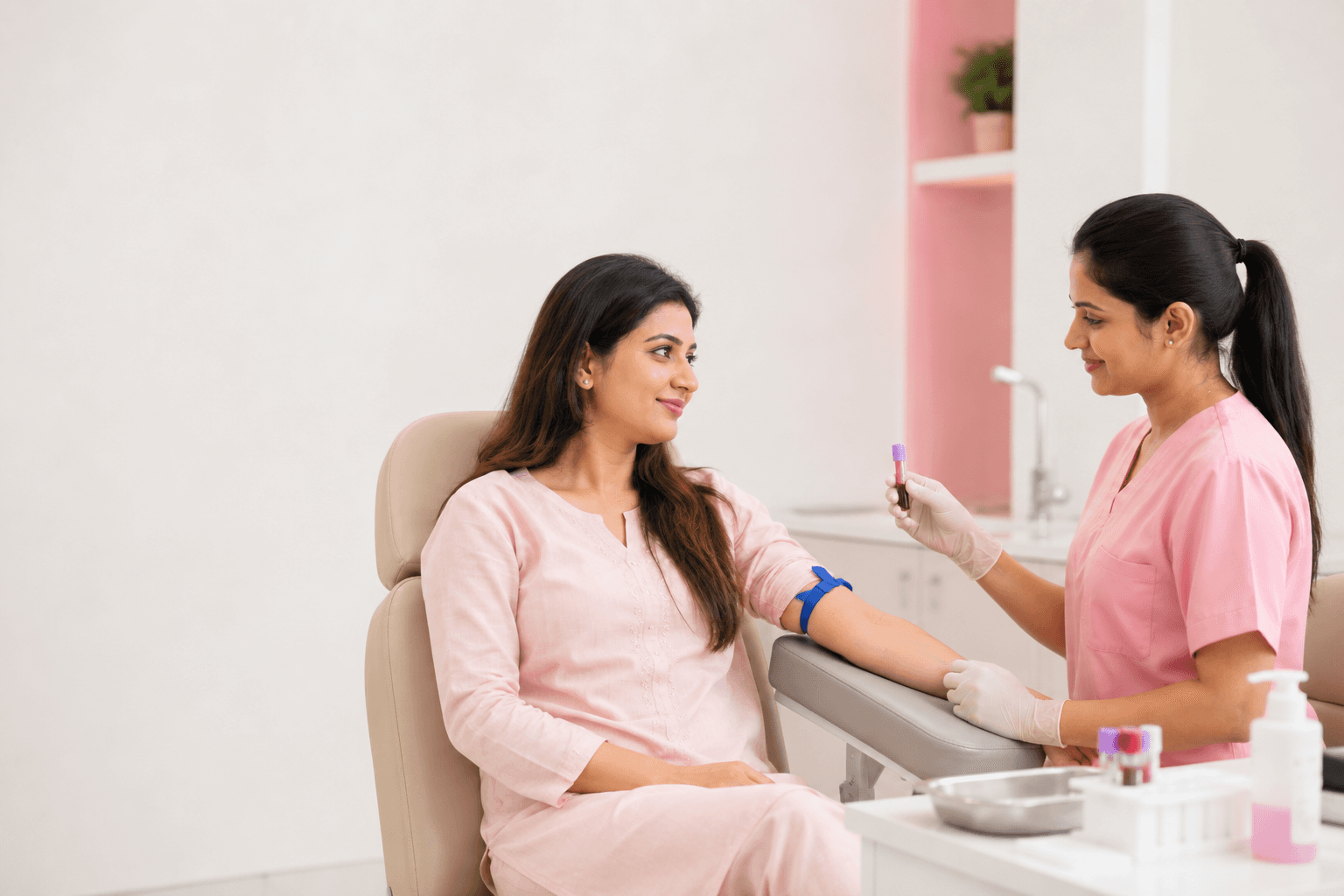
A small blood sample is taken from your arm, similar to a routine blood test. The process is quick and well-tolerated.
Step 2 – Laboratory Processing
The blood sample is processed in a centrifuge to separate and concentrate the platelets, creating the PRP preparation.
Step 3 – Preparation
The concentrated PRP is prepared for administration. The entire process from blood draw to prepared PRP typically takes about 30-45 minutes.
Step 4 – Administration
The prepared PRP is administered as part of your planned procedure — which may involve intrauterine infusion, ovarian injection, or another approach depending on your specific case.
Step 5 – Follow-Up
Timing and follow-up are coordinated with your overall treatment plan. Dr. Rai will explain what to expect and when.
Benefits
- Uses your own blood sample, prepared in a controlled process — no risk of transmission of infectious diseases or allergic reactions
- Contains concentrated growth factors that may support tissue regeneration and healing
- Considered only after individual evaluation — never recommended without proper clinical indication
- Minimally invasive with no incisions required
- Can be integrated into a broader, individualised fertility treatment plan
- Autologous therapy with low risk of adverse reactions
Things to know
- Not appropriate or established for every situation — discussed individually based on your specific findings
- Should follow a proper evaluation rather than be requested as a standalone option without clinical indication
- Outcomes vary by individual case and are not guaranteed — the evidence base is still evolving
- The mechanism of action is not fully understood, and research is ongoing
- Multiple treatments may be needed in some cases
- Costs associated with the therapy should be discussed upfront
- Not all patients will be suitable candidates for PRP therapy
- HFEA currently rates PRP red for improving the chance of having a baby for most fertility patients because available evidence suggests it may reduce treatment effectiveness or there are safety concerns
Getting ready
Before considering PRP, Dr. Rai reviews your complete fertility history, including ovarian reserve testing (AMH, AFC), endometrial assessment, previous IVF cycles, and any other relevant investigations.
PRP starts with a routine blood draw, similar to a standard blood test — no special preparation is usually required beforehand, though Dr. Rai will confirm any specific instructions relevant to your planned procedure.
If you're having PRP as part of a fertility treatment cycle, the timing of the procedure will be coordinated with your overall treatment plan. Dr. Rai will advise on the best timing for your specific situation.
You should inform the clinic of any medications you're taking, particularly blood thinners, as these may affect the PRP preparation or the procedure itself.
What to expect
Because PRP is prepared from your own blood, the process starts with a straightforward blood draw — similar to having blood taken for a routine test. The blood is then processed in the lab while you wait. The PRP is then administered as part of your planned procedure. Dr. Rai will explain the specific administration process relevant to your case, whether that involves intrauterine infusion, ovarian injection, or another approach. The entire process is performed in a clinical setting under medical supervision.
PRP for Fertility in Noida
Ovarian PRP for low ovarian reserve and intrauterine PRP for thin endometrium at Divine IVF, Sector 76, Noida.
📍 Sector 76, Noida, Uttar Pradesh
📞 Call: +91 7678451808
What Is PRP for Fertility?
PRP stands for Platelet-Rich Plasma. It is an autologous therapy prepared from your own blood sample, which is processed to concentrate platelets that contain growth factors and bioactive proteins.
In fertility care, PRP has been explored in specific, individually evaluated contexts. It is not a routine fertility treatment and its routine benefit for improving pregnancy or live-birth outcomes remains uncertain.
At Divine IVF, Sector 76, Noida, Dr. Mandavi Rai provides personalised fertility evaluation for diminished ovarian reserve, poor ovarian response, thin endometrium and implantation concerns, including evidence-based counselling regarding PRP fertility treatment add-ons.
Types of PRP for Fertility
Ovarian PRP
Ovarian PRP involves injecting concentrated platelets and growth factors into the ovaries. It has been proposed to potentially improve ovarian function in women with:
- Diminished ovarian reserve
- Poor ovarian response
- Premature ovarian insufficiency (POI)
- Low AMH
However, its routine benefit remains unproven.
Intrauterine PRP
Intrauterine PRP involves infusing PRP into the uterine cavity. It has been proposed to potentially improve endometrial thickness and receptivity in women with:
- Thin endometrium
- Refractory endometrium
- Recurrent implantation failure
However, its routine benefit remains unproven.
Who May Be Considered for PRP?
PRP is not for everyone. It may be discussed in selected patients after thorough evaluation:
A thorough evaluation of recognised causes should be completed before considering PRP.
What Does the Evidence Say?
Is PRP Proven to Improve IVF Success?
No.
HFEA currently rates PRP red for improving the chance of having a baby for most fertility patients because available evidence suggests it may reduce treatment effectiveness or there are safety concerns.
Some smaller studies have suggested possible benefits, but the evidence is inconsistent and limited by small sample sizes and lack of robust controls.
Can PRP Improve Ovarian Function?
Some studies have reported possible improvements in AMH, antral follicle count, and ovarian response after ovarian PRP. However:
- Studies are limited and results inconsistent
- Mechanism of action is not fully understood
- No reliable evidence that PRP consistently improves live-birth rates
- Individual responses vary significantly
Can PRP Improve Endometrial Thickness?
Some studies have reported improvements in endometrial thickness and pregnancy rates after intrauterine PRP in women with thin endometrium. However:
- Evidence is limited and inconsistent
- Standard treatments should be considered first
- No reliable evidence that PRP consistently improves live-birth rates
Risks and Limitations of PRP
Possible Risks
- Pain at injection site
- Bleeding
- Infection
- Ovarian injury (for ovarian PRP)
- Uterine perforation (for intrauterine PRP)
- Allergic reactions (rare, but possible)
- Adhesion formation
Important Limitations
- Not a proven standard fertility treatment
- Does not guarantee pregnancy
- Does not guarantee improved ovarian reserve
- Does not guarantee improved endometrial thickness
- Evidence base is limited and inconsistent
- May involve significant cost
- Not all patients are suitable candidates
What Should Be Evaluated Before PRP?
Before considering PRP, a thorough evaluation should be completed:
1. Ovarian Reserve Assessment
AMH, antral follicle count, and FSH levels to assess ovarian function.
2. Uterine Evaluation
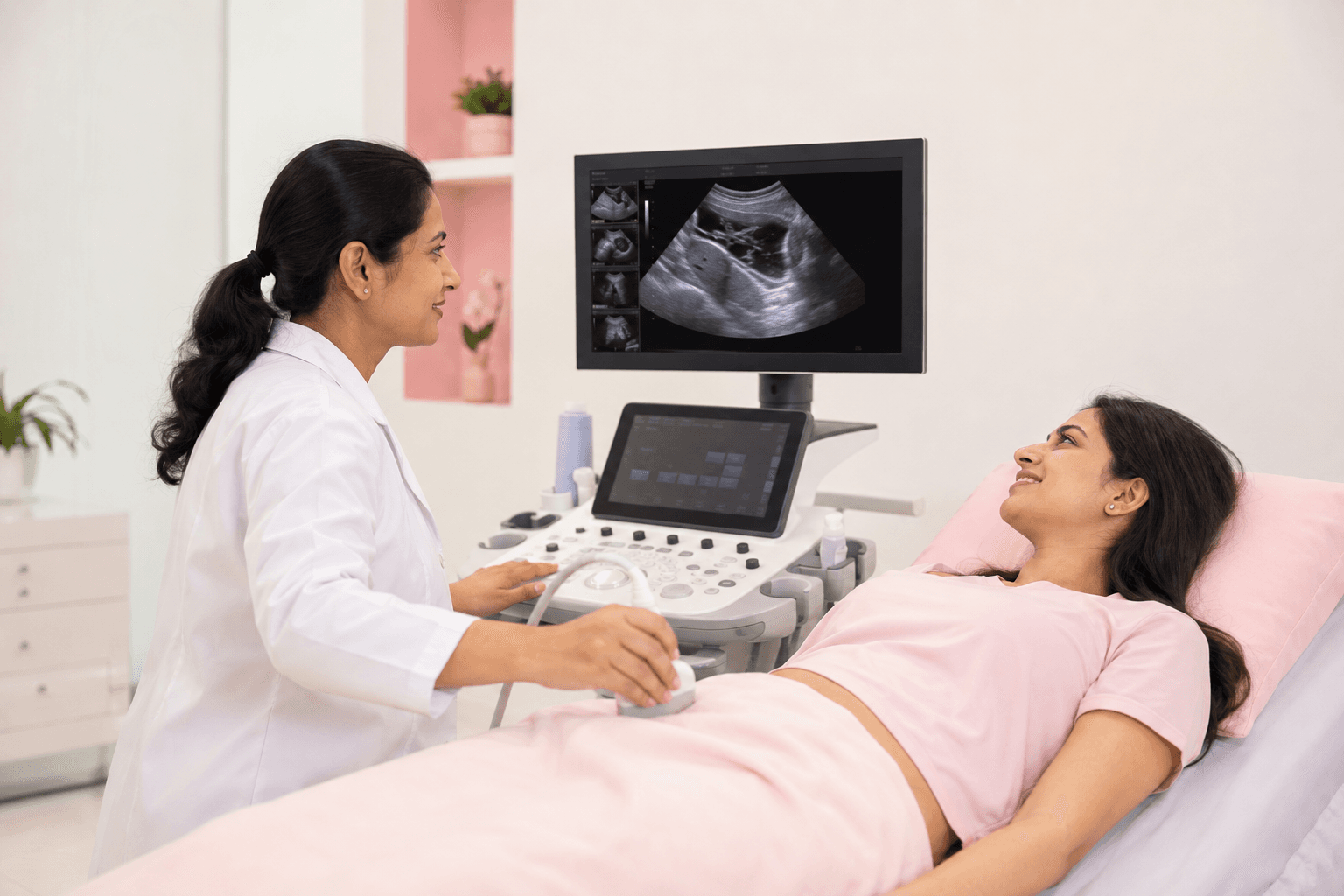
Ultrasound, saline sonography, or hysteroscopy to assess uterine cavity and endometrium.
3. Previous IVF History
Review of previous ovarian response, embryo development, and transfer outcomes.
4. Male Fertility Factors
Semen analysis and relevant male fertility assessment.
5. Genetic Factors
Genetic evaluation when clinically indicated.
This helps identify whether PRP is likely to be relevant or whether other treatments are more appropriate.
PRP vs Standard Fertility Treatments
PRP vs IVF
PRP is not a replacement for IVF. IVF is the core fertility treatment that involves ovarian stimulation, egg retrieval, fertilisation, and embryo transfer. PRP may be discussed as an experimental adjunct in selected cases, not as an alternative to standard fertility treatment.
PRP vs Fertility Investigation
A proper fertility investigation should come before any experimental treatment. This includes assessment of ovarian reserve, uterine health, tubal patency, semen analysis, and other relevant factors. PRP should only be considered after this evaluation is complete.
PRP vs Egg Donor IVF
For women with severely reduced ovarian reserve, Egg Donor IVF is an established treatment option with evidence of benefit. PRP is experimental and should not be presented as an alternative to established treatments.
Questions to Ask Before PRP
Before considering PRP, ask your fertility specialist:
PRP for Fertility Cost in Noida
The cost of PRP for fertility in Noida varies depending on the type of PRP (ovarian vs intrauterine), number of treatments, and associated procedures.
Costs may include:
Patients should ask about the evidence supporting PRP in their specific case before paying for this experimental add-on.
Why Choose Divine IVF for Fertility Evaluation
- ✓Personalised Fertility Assessment — PRP is considered only after reviewing your ovarian reserve, endometrial health, previous treatment and overall fertility profile.
- ✓Evidence-Based Counselling — Experimental add-ons are discussed with clear information about their benefits, limitations and current evidence.
- ✓Comprehensive Fertility Care — From ovarian reserve testing to IVF treatment and embryo transfer, all aspects of fertility care are available.
- ✓Care Under Dr. Mandavi Rai — Treatment planning is provided under the guidance of Dr. Mandavi Rai, Gynecologist & IVF Specialist in Noida.
- ✓Convenient Location in Sector 76, Noida — Divine IVF is located in Sector 76, Noida, for patients seeking fertility evaluation and treatment in Noida.
Book a PRP Consultation in Noida
If you have low ovarian reserve, thin endometrium, poor ovarian response, or recurrent implantation failure, start with a detailed fertility evaluation to understand your options. At Divine IVF, Sector 76, Noida, Dr. Mandavi Rai provides personalised fertility assessment and evidence-based counselling regarding PRP and other fertility treatment options.
Divine IVF · Sector 76, Noida, Uttar Pradesh
Resources
Common questions
PRP stands for Platelet-Rich Plasma. It is an autologous therapy prepared from your own blood, processed to concentrate platelets and growth factors. In fertility, it has been explored for ovarian rejuvenation and improving endometrial thickness, but its routine benefit remains uncertain.
No. PRP is not considered a standard evidence-based fertility treatment. HFEA currently rates PRP red for improving the chance of having a baby for most fertility patients because available evidence suggests it may reduce treatment effectiveness or there are safety concerns.
PRP may be discussed in selected patients with diminished ovarian reserve, poor ovarian response, premature ovarian insufficiency, thin endometrium, or recurrent implantation failure after thorough evaluation of all recognised causes.
Ovarian PRP involves injecting concentrated platelets and growth factors into the ovaries. It has been proposed to potentially improve ovarian function, but its routine benefit remains unproven.
Intrauterine PRP involves infusing PRP into the uterine cavity. It has been proposed to potentially improve endometrial thickness and receptivity, but its routine benefit remains unproven.
Some studies have reported possible AMH increases after PRP, but findings are inconsistent. There is no reliable evidence that PRP consistently improves AMH or ovarian reserve.
Some studies have reported improvements in endometrial thickness after PRP, but evidence is limited and inconsistent. Standard treatments for thin endometrium should be considered before experimental therapies.
No. PRP cannot guarantee pregnancy. It should be considered as an experimental adjunct, not a proven fertility treatment.
PRP is prepared from your own blood, which minimises the risk of allergic reactions or transmission of infectious diseases. However, the procedure itself carries risks including infection, bleeding, and pain at the injection site.
Cost varies depending on the type of PRP (ovarian vs intrauterine), number of treatments, and associated procedures. Patients should ask about the evidence supporting PRP in their specific case before paying for this experimental add-on.
You can consult Dr. Mandavi Rai at Divine IVF, Sector 76, Noida for personalised fertility evaluation and evidence-based counselling regarding PRP and other fertility treatment options.
Ready to talk to Dr. Mandavi Rai?
Bring your questions, your history, and your pace — we`ll build the next step together.