
LIT Therapy, Ovary & Uterus Evaluation in Noida Personalised evaluation of ovarian, uterine and implantation-related factors for women experiencing recurrent pregnancy loss, failed embryo transfers or previous IVF failure
If you have experienced repeated miscarriages, unsuccessful embryo transfers or failed IVF treatment, you may have come across Lymphocyte Immunization Therapy (LIT) while researching reproductive immunology and implantation treatments.
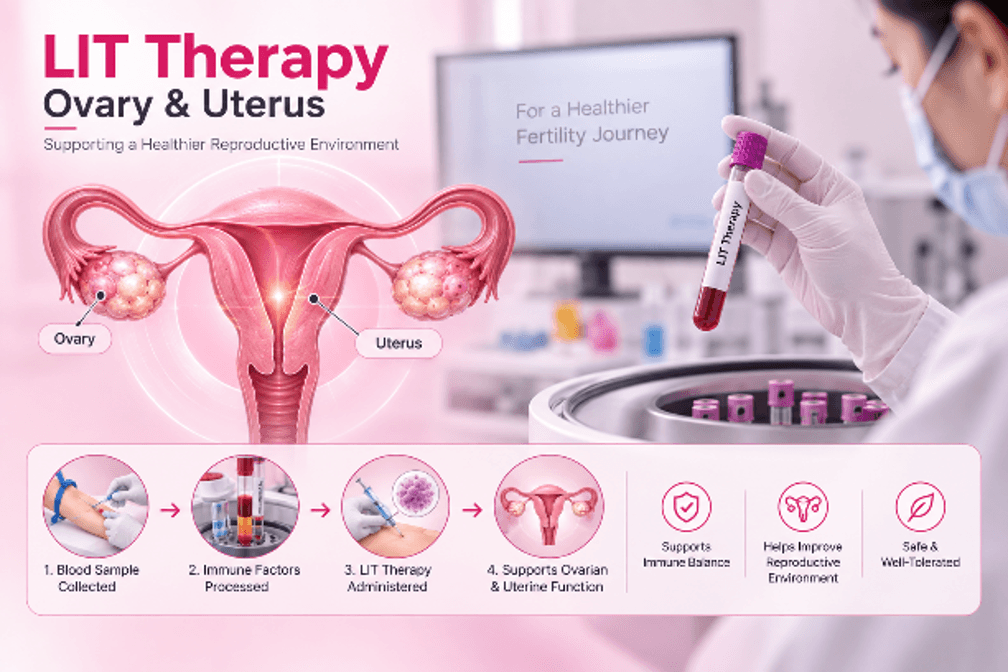
What is LIT Therapy, Ovary & Uterus Evaluation?
LIT stands for Lymphocyte Immunization Therapy. It is an immune-based treatment in which lymphocytes are prepared and administered with the proposed aim of modifying the maternal immune response.
Historically, LIT has been explored in women experiencing recurrent pregnancy loss, repeated implantation failure, previous IVF failure, and suspected immune-related reproductive concerns.
However, reliable evidence of improved live-birth outcomes has not been established. LIT should therefore not be presented as a routine or proven fertility treatment.
At Divine IVF, Sector 76, Noida, Dr. Mandavi Rai provides personalised assessment of fertility factors involving the ovaries, uterus, embryos and reproductive history before optional or experimental immune treatments are considered. It is important to understand that LIT does not directly treat the ovaries or uterus.
How it works
Step 1 – Evaluation
A thorough review of your specific ovarian and uterine findings from fertility investigation, including hormonal levels, ovarian reserve, and uterine health.
Step 2 – Immunological Assessment
Specific immunological investigations may be performed to identify potential immune factors affecting ovarian or uterine function.
Step 3 – Preparation
Blood is taken from the partner (or a donor) to prepare the lymphocytes for administration, with the therapy targeted to ovarian or uterine findings.
Step 4 – Administration
The prepared lymphocytes are administered to the patient in a clinical setting under medical supervision.
Step 5 – Treatment Monitoring
The patient is monitored during and after administration as standard practice.
Step 6 – Treatment Integration
The therapy is timed and integrated with your overall fertility treatment plan to specifically support ovarian function or uterine receptivity.
Benefits
- Currently, there are no proven benefits of LIT for unexplained recurrent pregnancy loss or implantation failure that are supported by major reproductive-medicine guidelines.
- ESHRE specifically recommends that LIT should not be used as treatment for unexplained recurrent pregnancy loss because a significant beneficial effect has not been established and serious adverse effects may occur.
- Patients should be aware that LIT is not considered a standard evidence-based fertility treatment.
Things to know
- It is not considered a standard evidence-based fertility treatment
- Major reproductive-medicine guidelines do not recommend its routine use for unexplained recurrent pregnancy loss
- A meaningful clinical benefit has not been established
- Potential adverse effects exist
- ESHRE recommends against its use due to lack of proven benefit and potential serious adverse effects
- LIT does not directly improve ovarian reserve, egg quantity or egg quality
- LIT does not correct structural problems within the uterus
- LIT should not be used as a substitute for proper ovarian and uterine assessment
Getting ready
Before considering any experimental immune treatment, patients with recurrent miscarriage or failed implantation should receive a structured evaluation. This includes pregnancy history review, ovarian health assessment, uterine health evaluation, genetic assessment, review of relevant medical conditions, and male fertility factors.
Before considering LIT Therapy, Dr. Rai reviews your fertility and pregnancy history in detail, including any previous IVF cycles, ovarian response, and uterine assessment findings. Specific immunological investigations may be recommended first to establish whether the therapy is relevant to your case.
The therapy requires careful timing relative to your treatment cycle, and the preparation process is planned individually.
What to expect
Dr. Rai will explain the specific reasoning and process for your case, since this therapy is considered only after individual evaluation. The administration itself is similar to a routine blood product transfusion, performed in a clinical setting under medical supervision. You'll be monitored during and after the procedure. The therapy is timed to support your fertility treatment cycle, and you'll receive clear guidance on the schedule and what to expect.
LIT Therapy, Ovary & Uterus Evaluation in Noida
Personalised evaluation of ovarian, uterine and implantation-related factors for women experiencing recurrent pregnancy loss, failed embryo transfers or previous IVF failure.
📍 Sector 76, Noida, Uttar Pradesh
📞 Call: +91 7678451808

What Is LIT Therapy?
LIT stands for Lymphocyte Immunization Therapy.
It is an immune-based treatment in which lymphocytes are prepared and administered with the proposed aim of modifying the maternal immune response.
Historically, LIT has been explored in women experiencing:
- Recurrent pregnancy loss
- Repeated implantation failure
- Previous IVF failure
- Suspected immune-related reproductive concerns
However, reliable evidence of improved live-birth outcomes has not been established. LIT should therefore not be presented as a routine or proven fertility treatment.
Does LIT Therapy Treat the Ovary?
No.
LIT does not directly improve ovarian reserve, egg quantity or egg quality.
Ovarian health is generally evaluated separately using factors such as:
- Female age
- AMH
- Antral follicle count
- Menstrual history
- Ultrasound findings
- Previous ovarian response during IVF
Conditions affecting the ovaries may include PCOS, reduced ovarian reserve, ovarian cysts, endometriomas, and premature ovarian insufficiency. These conditions require diagnosis-specific management rather than LIT.
Does LIT Therapy Treat the Uterus?
No.
LIT does not correct structural problems within the uterus.
Conditions that can affect implantation or pregnancy may include:
- Fibroids
- Uterine polyps
- Intrauterine adhesions
- Uterine septum
- Adenomyosis
- Endometrial abnormalities
These require appropriate gynaecological investigation and treatment. LIT should not be used as a substitute for proper uterine assessment.
Why Are the Ovary and Uterus Important for Fertility?
Successful conception and pregnancy depend on several reproductive factors working together.
Ovaries
The ovaries are responsible for developing eggs, ovulation, and production of reproductive hormones. Ovarian reserve and egg quality can influence fertility and IVF outcomes.
Uterus
The uterus provides the environment where an embryo implants and pregnancy develops. Structural or endometrial abnormalities may affect implantation, pregnancy maintenance, and menstrual health.
A complete fertility assessment therefore considers both ovarian and uterine factors.
Ovary and Uterus Evaluation in Fertility Treatment
Ovary Evaluation in Fertility Treatment
Ovarian assessment may include several investigations:
- AMH Test — Anti-Müllerian Hormone is commonly used as one marker of ovarian reserve
- Antral Follicle Count — Antral follicles can be counted during ultrasound
- Pelvic Ultrasound — Can help identify ovarian cysts, endometriomas, PCOS-related ovarian features, follicle development, and ovarian anatomy
- Hormonal Testing — May include FSH, LH, Estradiol, thyroid function, and prolactin depending on clinical circumstances
Not every patient requires every hormonal test.
Uterus Evaluation in Fertility Treatment
Several investigations may be used to assess uterine health:
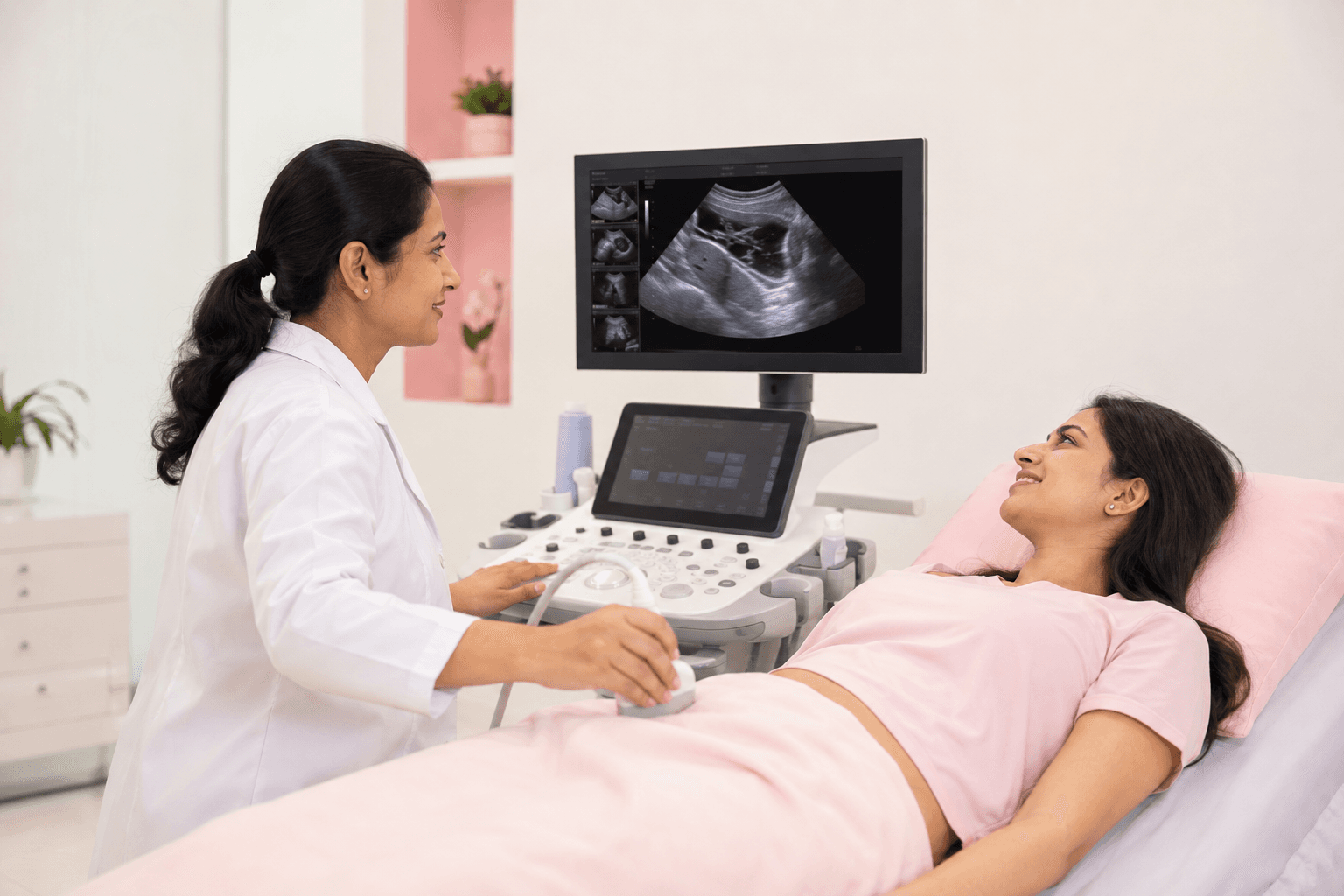
- Pelvic or Transvaginal Ultrasound — May help evaluate uterine shape, fibroids, endometrial thickness, adenomyosis, certain polyps, and other abnormalities
- Hysteroscopy — Allows a doctor to examine the inside of the uterine cavity for polyps, submucosal fibroids, adhesions, uterine septum, and other cavity abnormalities
- Additional Imaging — Depending on findings, additional investigations may sometimes be recommended
The appropriate test depends on symptoms and reproductive history.



LIT in Specific Situations
LIT Therapy and Recurrent Pregnancy Loss
Repeated pregnancy loss can occur for many different reasons. Possible factors include embryo chromosome abnormalities, maternal age, uterine abnormalities, parental chromosome abnormalities, antiphospholipid syndrome, certain endocrine conditions, and other medical factors. In many patients, no single cause is identified.
LIT has historically been proposed for unexplained recurrent miscarriage, but current evidence does not support its routine use.
LIT and Recurrent Implantation Failure
Repeated embryo-transfer failure can also have several possible causes. These may include embryo quality, embryo chromosomal abnormalities, female age, uterine conditions, endometrial preparation, hydrosalpinx, male fertility factors, embryology factors, and transfer-related factors.
Immune therapy should not replace investigation of these recognised causes.
LIT After Failed IVF
A failed IVF cycle does not automatically indicate an immune problem.
Before considering immune-related therapies, a fertility specialist may review:
This helps identify whether changes to the standard fertility treatment plan may be more appropriate.
LIT Therapy and Natural Killer Cells
Natural Killer, or NK cells, are normal components of the immune system and are also found in the uterus.
Some reproductive immunology theories have linked abnormal NK-cell activity with miscarriage or implantation failure.
However:
- Blood NK cells do not necessarily represent uterine NK-cell activity
- Testing methods vary
- Reliable diagnostic thresholds are not established
- An abnormal result does not automatically indicate LIT
Routine immune testing and treatment are not currently recommended for recurrent pregnancy loss.
What Should Be Evaluated Before Considering LIT?
1. Pregnancy History
The doctor reviews number of miscarriages, gestational age at each loss, previous live births, previous IVF pregnancies, and previous genetic testing.
2. Ovarian Health
Assessment may include AMH, ultrasound, antral follicle count, previous IVF response, and female age.
3. Uterine Health
Evaluation may consider fibroids, polyps, adhesions, septum, adenomyosis, and uterine cavity abnormalities.
4. Genetic Factors
Genetic assessment may be considered according to pregnancy history. Testing miscarriage tissue can also provide useful information in selected recurrent pregnancy-loss cases.
5. Relevant Medical Conditions
Conditions such as thyroid disease, diabetes, antiphospholipid syndrome, and other maternal health conditions may require evaluation and appropriate management.
6. Male Fertility Factors
Evaluation of the male partner may include semen analysis, relevant medical history, and additional investigations in selected cases. Fertility assessment should consider both partners.
Ovary and Uterine Problems That May Affect Fertility
Ovary Problems That May Affect Fertility
- Reduced Ovarian Reserve — A reduced number of available eggs may affect response to fertility treatment
- PCOS — Can interfere with regular ovulation and may affect fertility
- Endometrioma — Endometriosis-related ovarian cysts may affect pain, ovarian reserve or fertility treatment planning
- Ovarian Cysts — Not every ovarian cyst affects fertility, but persistent or clinically significant cysts may require assessment
- Premature Ovarian Insufficiency — Reduced ovarian function at an unexpectedly young age may significantly affect natural conception and fertility-treatment options
Uterine Problems That May Affect Implantation
- Fibroids — Certain fibroids may interfere with implantation depending on their size and location
- Endometrial Polyps — Polyps within the uterine cavity may affect implantation in selected cases
- Intrauterine Adhesions — Scar tissue within the uterine cavity can affect menstruation, implantation and pregnancy
- Uterine Septum — A congenital uterine septum may be associated with certain pregnancy complications
- Adenomyosis — May affect menstrual symptoms and fertility in some women
LIT vs Other Treatments
LIT vs Standard Ovary and Uterus Treatment
LIT is fundamentally different from treatments targeting ovarian or uterine conditions.
Ovarian Treatment May Include: Ovulation management, PCOS management, IVF stimulation protocols, monitoring, and surgical treatment in selected cases.
Uterine Treatment May Include: Medical management, hysteroscopy, laparoscopy, fibroid or polyp management, and treatment of adhesions.
LIT is an immune-based experimental treatment and does not correct these structural or ovarian conditions.
LIT vs Intralipid Therapy
Both have been discussed as reproductive immunology treatments, but they are different. LIT involves lymphocyte immunisation. Intralipid uses intravenous lipid emulsion. Neither treatment should replace recognised fertility evaluation.
LIT vs ERA Test
LIT is an immune-based treatment. ERA is an endometrial receptivity test intended to assess proposed embryo-transfer timing. These procedures target different theories and neither should automatically be added to IVF treatment.
Can LIT Improve Fertility Parameters?
Can LIT Improve Egg Quality?
There is no established evidence that LIT improves egg quality.
Egg quality is strongly influenced by factors such as female age, ovarian biology, and certain medical and genetic factors.
LIT should not be marketed as an egg-quality treatment.
Can LIT Increase Ovarian Reserve?
No established evidence shows that LIT increases AMH, egg number, antral follicle count, or ovarian reserve.
Patients with reduced ovarian reserve require an appropriate fertility assessment and treatment strategy.
Can LIT Improve the Uterine Lining?
LIT has not been established as a treatment for increasing endometrial thickness or correcting uterine lining problems.
Thin endometrium or other endometrial concerns require separate evaluation.
Does LIT Improve Implantation?
Reliable clinical evidence has not established LIT as a proven method for improving implantation.
Repeated implantation problems should first undergo a structured evaluation for recognised causes.
Does LIT Prevent Miscarriage?
Current major guidelines do not support LIT as a proven miscarriage-prevention treatment.
ESHRE advises against LIT for unexplained recurrent pregnancy loss because significant benefit has not been shown and serious adverse effects may occur.
Risks and Limitations of LIT
Potential Concerns
- Injection-site reactions
- Pain
- Swelling
- Fever
- Allergic or immune reactions
- Infection-transmission concerns
- Immune sensitisation
- Other adverse effects
Important Limitations
- No proven benefit for ovarian reserve
- No proven improvement in egg quality
- No structural treatment of the uterus
- No proven routine benefit for recurrent miscarriage
- No guaranteed improvement in implantation or live birth
LIT Therapy Cost in Noida
The cost of LIT Therapy in Noida may vary depending on consultations, laboratory processing, proposed number of sessions, immune investigations, and associated fertility testing.
However, before considering cost, patients should establish whether the treatment is clinically justified.
The more important investment may be a proper assessment of:
- Ovarian health
- Uterine anatomy
- Embryo factors
- Genetics
- Recurrent miscarriage causes
- Previous IVF treatment
Why Choose Divine IVF for Ovary & Uterus Fertility Evaluation in Noida?
- ✓Complete Fertility Assessment — Treatment planning considers the ovaries, uterus, embryos and other reproductive factors.
- ✓Ovarian Reserve Evaluation — AMH, ultrasound and other appropriate investigations can help assess ovarian function.
- ✓Uterine Assessment — Fibroids, cysts, polyps, adenomyosis and other pelvic conditions can be evaluated where clinically indicated.
- ✓Recurrent Pregnancy Loss Evaluation — Repeated miscarriages can be investigated for recognised genetic, uterine and medical causes.
- ✓IVF Failure Review — Previous IVF and embryo-transfer outcomes can be reviewed before optional treatments are considered.
- ✓Evidence-Based Fertility Counselling — Experimental immune therapies are discussed with appropriate information regarding evidence and limitations.
- ✓Care Under Dr. Mandavi Rai — Treatment planning is provided under the guidance of Dr. Mandavi Rai, Gynecologist & IVF Specialist in Noida.
Book an Ovary & Uterus Fertility Consultation in Noida
If you have experienced recurrent miscarriage, unsuccessful embryo transfers or IVF failure, identifying possible ovarian, uterine, embryo-related or medical factors should come before unproven treatments. At Divine IVF, Sector 76, Noida, Dr. Mandavi Rai provides personalised fertility evaluation according to your reproductive history and treatment needs.
Divine IVF · Sector 76, Noida, Uttar Pradesh
Resources
Common questions
LIT stands for Lymphocyte Immunization Therapy. It is an immune-based therapy that has historically been proposed for recurrent miscarriage and implantation concerns.
No. LIT does not treat reduced ovarian reserve, poor egg quality, PCOS or ovarian cysts.
No. It does not remove fibroids, polyps, adhesions, septum or other structural uterine abnormalities.
There is no established evidence that LIT increases AMH or ovarian reserve.
There is no established evidence that LIT improves egg quality.
LIT has not been proven to increase endometrial thickness.
Ovarian evaluation may provide information about fertility planning, although ovarian reserve testing itself is not routinely recommended solely as a recurrent pregnancy-loss test.
Certain uterine abnormalities may be associated with recurrent pregnancy loss and can require targeted evaluation.
Current major reproductive guidelines do not recommend routine LIT for unexplained recurrent pregnancy loss.
Not routinely. Previous IVF treatment should first be reviewed for embryo, ovarian, uterine and other relevant factors.
No. LIT involves lymphocytes whereas intralipid therapy uses an intravenous lipid emulsion.
No.
Depending on the fertility situation, evaluation may include AMH, ultrasound, antral follicle count and relevant hormone tests.
Ultrasound is commonly used first. In selected cases, hysteroscopy or other imaging may be recommended.
You can consult Dr. Mandavi Rai at Divine IVF, Sector 76, Noida for personalised fertility, ovarian and uterine assessment.
Ready to talk to Dr. Mandavi Rai?
Bring your questions, your history, and your pace — we`ll build the next step together.