
Cesarean Delivery in Noida Personalised pregnancy and delivery planning for planned and emergency Cesarean birth
A Cesarean delivery, commonly called a C-section, is a surgical method of delivering a baby through incisions made in the abdomen and uterus. In some pregnancies, Cesarean delivery may be the safest or most appropriate option for the mother, baby, or both.
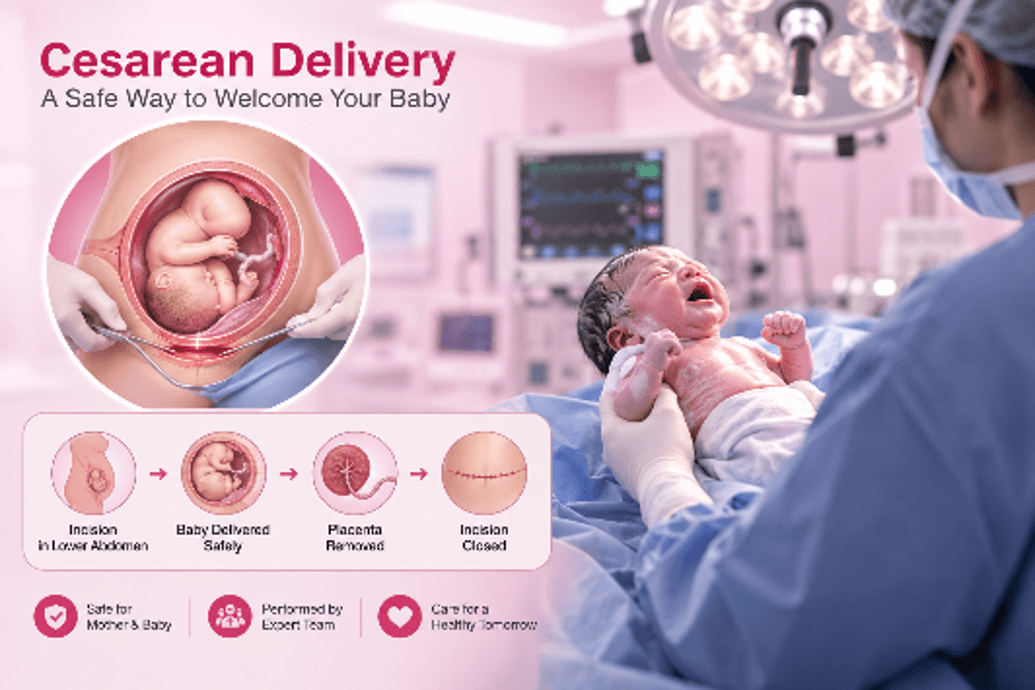
What is Cesarean Delivery?
A Cesarean delivery (C-section) is an operation in which a baby is delivered through surgical incisions made in the mother's abdomen and the uterus.
It may be planned before labour begins, decided during labour, or performed urgently in an emergency. The exact reason, timing and surgical approach depend on the individual pregnancy.
At Divine IVF, Sector 76, Noida, Dr. Mandavi Rai provides personalised pregnancy assessment and delivery planning based on maternal health, fetal well-being, previous pregnancy history, placental position, fetal presentation and progress of labour.
The decision for Cesarean delivery should be based on individual clinical circumstances rather than being considered necessary for every pregnancy.
How it works
Step 1 – Preoperative Assessment
Before surgery, the healthcare team reviews maternal condition, fetal condition, blood pressure, blood tests, fetal heart rate, reason for Cesarean, and previous medical and pregnancy history.
Step 2 – IV Line and Preparation
An intravenous line is usually placed to provide fluids, medicines, and antibiotics when appropriate. The abdomen is prepared for surgery. A urinary catheter is commonly inserted to keep the bladder empty.
Step 3 – Anaesthesia
Most Cesarean deliveries are performed using regional anaesthesia (spinal or epidural) which numbs the lower body while allowing the mother to remain awake. General anaesthesia may be required in selected urgent situations.
Step 4 – Abdominal Incision
A surgical incision is made through the abdominal wall. The common skin incision is usually horizontal in the lower abdomen (bikini-line).
Step 5 – Uterine Incision
An incision is then made in the uterus. The type of uterine incision depends on the clinical situation.
Step 6 – Delivery of the Baby
The baby is carefully delivered through the uterine and abdominal incisions. The umbilical cord is clamped and cut.
Step 7 – Placenta Delivery
The placenta is removed and the uterus is examined.
Step 8 – Closing the Incisions
The uterus and abdominal layers are closed using appropriate surgical techniques.
Step 9 – Recovery Monitoring
After surgery, the mother is monitored for blood pressure, pulse, bleeding, pain, uterine contraction, surgical wound, and recovery from anaesthesia.
Benefits
- A planned, controlled approach when medically indicated — reducing uncertainty and risks
- Available as a safe option when vaginal delivery isn't advisable — ensuring the safest outcome for you and your baby
- Can be scheduled in advance, allowing you to plan and prepare for your baby's arrival
- Reduces the risk of certain birth injuries that may occur with difficult vaginal deliveries
- Provides a predictable, controlled environment for delivery
- Allows you to be awake and see your baby immediately after birth (with regional anaesthesia)
- Can be performed in emergency situations to protect the health of mother and baby
Things to know
- Generally involves a longer recovery period than vaginal delivery — typically 4-6 weeks before returning to normal activities
- As with any surgery, involves standard surgical risks — including bleeding, infection, and anaesthesia risks — which will be explained beforehand
- You'll have a visible scar on your lower abdomen, though it's placed low (bikini-line) for minimal visibility
- Future pregnancies may be affected — the risk of uterine rupture in subsequent pregnancies is increased
- Recovery guidance is provided to support healing after the procedure — including wound care, activity restrictions, and pain management
- Breastfeeding may be slightly more challenging initially due to positioning and discomfort, but support is available
- You may need more help at home during the first few weeks of recovery
Getting ready
For a planned cesarean, you'll typically have a pre-operative visit 1-2 weeks before your scheduled date to discuss anaesthesia options, fasting instructions, and what to expect on the day — so there are no surprises.
You'll be given clear instructions about when to stop eating and drinking before the procedure (typically nothing after midnight). You'll also be advised about any medications to take or avoid.
Packing for a slightly longer hospital stay than a vaginal delivery (typically 2-4 days) is recommended. Also, arranging support at home for the first couple of weeks is worth planning ahead of time.
For an emergency cesarean during labour, the preparation is more immediate — the team will explain what's happening and the reasons for the procedure clearly, and you'll be prepared for surgery as quickly and safely as possible.
What to expect
A cesarean delivery is a routine surgical procedure performed by an experienced surgical team. You'll be awake (with regional anaesthesia) and able to see your baby immediately after delivery. The procedure itself typically takes 30-60 minutes. Recovery from a cesarean typically takes longer than vaginal delivery, with attention to incision care and gradual return to normal activity. You'll be encouraged to walk within 12-24 hours to aid recovery and prevent blood clots. You can expect to stay in hospital for 2-4 days. The care team will guide you through what to expect in the days and weeks following.
Cesarean Delivery in Noida
Personalised pregnancy and delivery planning for planned and emergency Cesarean birth at Divine IVF, Sector 76, Noida.
📍 Sector 76, Noida, Uttar Pradesh
📞 Call: +91 7678451808

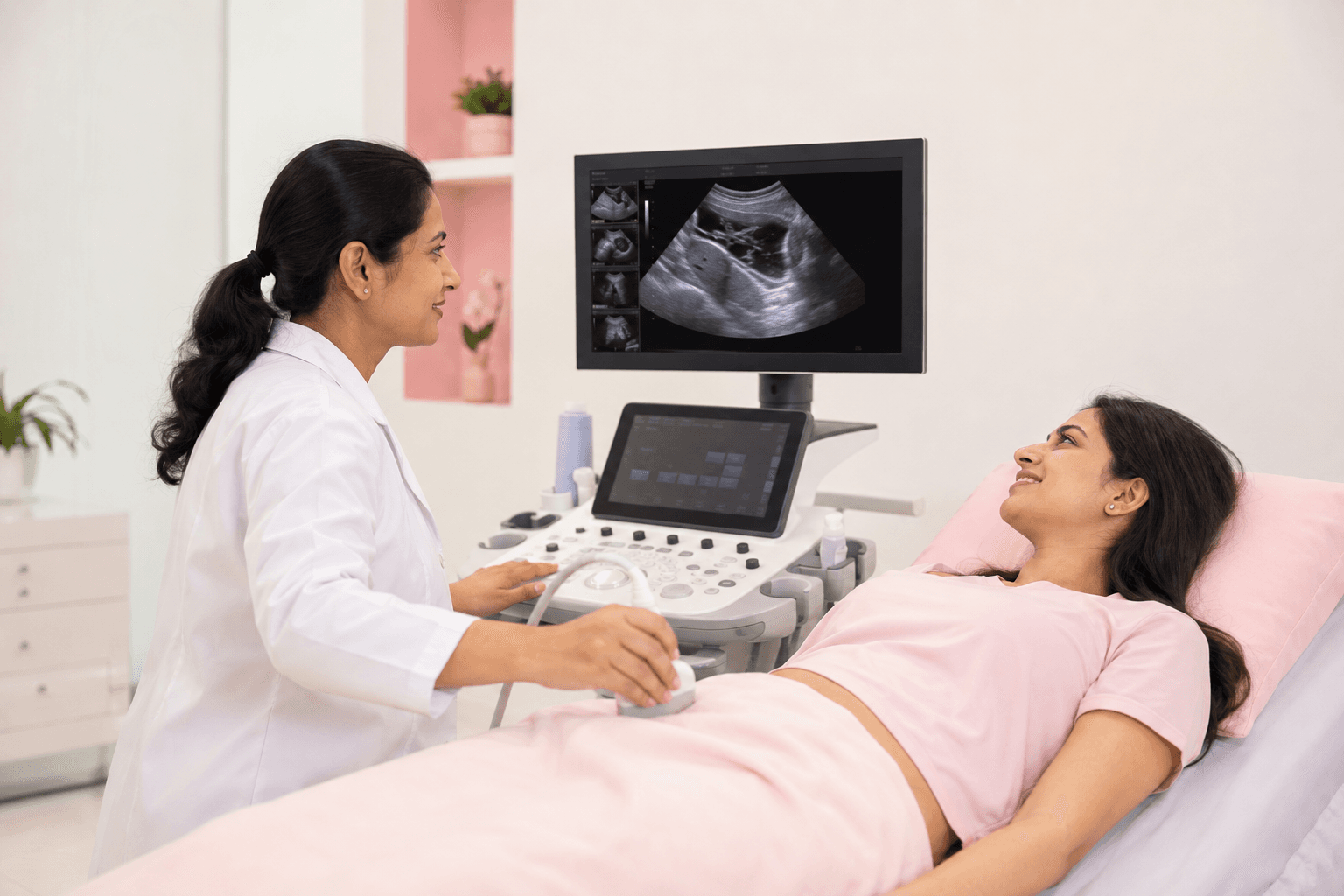
What Is a Cesarean Delivery?
A Cesarean delivery (C-section) is an operation in which a baby is delivered through surgical incisions made in:
- The mother`s abdomen
- The uterus
It may be:
- Planned before labour begins
- Decided during labour
- Performed urgently in an emergency
The exact reason, timing and surgical approach depend on the individual pregnancy.
Planned vs Emergency Cesarean Delivery
Planned Cesarean Delivery
Arranged before labour begins when there is a known medical or obstetric reason. Possible situations may include:
- Certain placenta problems
- Certain fetal presentations
- Selected previous uterine surgeries
- Some multiple pregnancies
- Certain maternal medical conditions
- Other obstetric indications
Emergency Cesarean Delivery
May become necessary during labour or pregnancy when a concern develops unexpectedly. Possible reasons include:
- Fetal heart-rate concerns
- Labour not progressing adequately
- Umbilical-cord complications
- Significant bleeding
- Certain placental complications
- Other urgent maternal or fetal concerns
The speed of surgery depends on how urgent the situation is.
Why Is a Cesarean Delivery Performed?
There is no single reason for C-section delivery. The decision depends on the condition of both mother and baby.
Labour Not Progressing
Sometimes the cervix does not dilate sufficiently or the baby does not descend despite adequate labour. Cesarean delivery may then be considered.
Fetal Distress or Fetal Heart-Rate Concern
During labour, fetal heart-rate monitoring may show patterns suggesting that the baby may not be tolerating labour well. Depending on the situation, urgent delivery may be required.
Breech Presentation
A breech baby is positioned with the buttocks or feet toward the birth canal rather than the head. Depending on gestational age, type of breech presentation and other clinical factors, Cesarean delivery may be recommended.
Transverse Lie
If the baby is positioned sideways near the time of delivery, vaginal birth may not be possible and Cesarean delivery may be required.
Placenta Previa
Placenta previa occurs when the placenta lies low in the uterus and covers or approaches the cervical opening. Significant placenta previa can make vaginal delivery unsafe due to the risk of bleeding. Cesarean delivery may therefore be recommended.
Placental Abruption
Placental abruption occurs when the placenta separates from the uterus before the baby is born. If significant bleeding or fetal compromise occurs, urgent Cesarean delivery may be necessary.
Umbilical Cord Problems
Certain cord complications can reduce oxygen supply to the baby. Examples may include umbilical cord prolapse or significant cord compression. Depending on severity, emergency Cesarean delivery may be required.
Cesarean Delivery After IVF Pregnancy
IVF pregnancy alone does not automatically require Cesarean delivery.
The mode of birth depends on:
Pregnancies conceived through IVF should receive appropriate antenatal monitoring, but delivery planning remains individualised.
Does Every IVF Pregnancy Need a C-Section?
No.
An IVF pregnancy can sometimes be delivered vaginally if there is no medical reason for Cesarean delivery. Cesarean birth should be based on obstetric indications rather than IVF conception alone.
Cesarean vs Vaginal Delivery & VBAC
Cesarean vs Vaginal Delivery
Neither method is universally better for every woman.
Vaginal Delivery
- Avoiding abdominal surgery
- Shorter hospital stay
- Faster recovery in many cases
Cesarean Delivery
- Can be lifesaving when vaginal delivery poses increased risk
- Planned approach when medically indicated
- Reduces certain birth injury risks
The safest option depends on individual clinical circumstances.
What Is VBAC?
VBAC stands for Vaginal Birth After Cesarean. It refers to vaginal delivery after a previous Cesarean birth.
A woman attempting vaginal birth after Cesarean is undergoing a Trial of Labor After Cesarean (TOLAC).
If successful, potential advantages can include:
- Avoiding another abdominal operation
- Shorter recovery
- Lower blood loss
- Lower infection risk
However, VBAC is not suitable for every patient because uterine scar rupture, although uncommon, can be serious.
Can You Have a Normal Delivery After C-Section?
Some women can. Suitability depends on:
- Type of previous uterine scar
- Reason for previous Cesarean
- Number of previous Cesareans
- Current pregnancy
- Fetal presentation
- Other maternal or fetal conditions
- Facility`s ability to perform emergency Cesarean if needed
This decision should be made with an obstetrician.
Cesarean Delivery Procedure – Step by Step
Step 1 – Preoperative Assessment
Before surgery, the healthcare team reviews maternal condition, fetal condition, blood pressure, blood tests, fetal heart rate, reason for Cesarean, and previous medical and pregnancy history.
Step 2 – IV Line and Preparation
An intravenous line is usually placed to provide fluids, medicines, and antibiotics when appropriate. The abdomen is prepared for surgery. A urinary catheter is commonly inserted to keep the bladder empty.
Step 3 – Anaesthesia
Most Cesarean deliveries are performed using regional anaesthesia (spinal or epidural) which numbs the lower body while allowing the mother to remain awake. General anaesthesia may be required in selected urgent or medical circumstances.
Step 4 – Abdominal Incision
A surgical incision is made through the abdominal wall. The common skin incision is usually horizontal in the lower abdomen.
Step 5 – Uterine Incision
An incision is then made in the uterus. The type of uterine incision depends on the clinical situation.
Step 6 – Delivery of the Baby
The baby is carefully delivered through the uterine and abdominal incisions. The umbilical cord is clamped and cut.
Step 7 – Placenta Delivery
The placenta is removed and the uterus is examined.
Step 8 – Closing the Incisions
The uterus and abdominal layers are closed using appropriate surgical techniques.
Step 9 – Recovery Monitoring
After surgery, the mother is monitored for blood pressure, pulse, bleeding, pain, uterine contraction, surgical wound, and recovery from anaesthesia.
Recovery After Cesarean Delivery
How Long Does C-Section Recovery Take?
Initial healing usually takes several weeks. Recovery varies depending on planned vs emergency surgery, maternal health, surgical complications, previous Cesareans, infection, blood loss, and individual healing.
Patients should follow their obstetrician`s instructions regarding walking, lifting, exercise, driving, sexual activity, and wound care.
Caring for the Cesarean Incision
General wound-care advice may include:
- Keep the wound clean and dry
- Follow dressing instructions
- Avoid unnecessary pressure on the incision
- Watch for redness or discharge
- Take prescribed medicines correctly
Specific care instructions should come from the treating surgical team.
Warning Signs After Cesarean Delivery
Seek medical attention if you experience:
These symptoms can indicate complications requiring prompt medical evaluation.
Risks of Cesarean Delivery
Maternal Risks
Most Cesarean deliveries are completed safely, but like any major operation, there are risks. Possible maternal complications include:
Rarely, severe bleeding may require additional surgery. ACOG also notes that risks of certain placenta problems and other complications increase with repeated Cesarean births.
Risks for the Baby
Potential newborn considerations may include:
- Temporary breathing problems
- Accidental surgical injury in rare cases
- Need for newborn monitoring
Risk depends on gestational age, reason for surgery and urgency of delivery.
Preparing for Cesarean Delivery
Preparing for a Planned Cesarean Delivery
Your obstetric team may advise:
- Preoperative blood tests
- Anaesthesia consultation
- Fasting instructions
- Medication instructions
- Hospital admission timing
- Birth and newborn-care planning
Do not stop prescribed medication unless advised by your doctor.
Cesarean Delivery Cost in Noida
The Cesarean Delivery cost in Noida varies according to several factors. These may include:
The final cost should be discussed with the hospital after evaluating the pregnancy and delivery plan.
Questions to Ask Before a Planned Cesarean
Consider asking:
Why Choose Divine IVF for Pregnancy & Cesarean Delivery Planning
- ✓Personalised Pregnancy Care — Delivery planning considers maternal and fetal health rather than using the same approach for every pregnancy.
- ✓Planned and Emergency Delivery Assessment — Pregnancy conditions are monitored so that the appropriate delivery method can be discussed.
- ✓IVF Pregnancy Care — Women who conceived through IVF can receive pregnancy follow-up and individualised delivery planning.
- ✓Gynaecology and Obstetric Care — Pregnancy management can take into account previous gynaecological, fertility and obstetric history.
- ✓Evidence-Based Birth Planning — The aim is to choose the mode of delivery according to maternal and fetal indications.
- ✓Care Under Dr. Mandavi Rai — Pregnancy and delivery planning is provided under the guidance of Dr. Mandavi Rai, Gynecologist & IVF Specialist in Noida.
- ✓Convenient Location in Sector 76, Noida — Divine IVF is located in Sector 76, Noida, for women seeking pregnancy and delivery consultation in Noida.
Book a Cesarean Delivery Consultation in Noida
If you are pregnant and have been advised a C-section, have had a previous Cesarean, conceived through IVF, or want to understand your delivery options, discuss your pregnancy individually with your obstetrician. At Divine IVF, Sector 76, Noida, Dr. Mandavi Rai provides personalised pregnancy and delivery planning based on maternal health, fetal well-being and obstetric indications.
Divine IVF · Sector 76, Noida, Uttar Pradesh
Resources
Common questions
A Cesarean delivery is the surgical birth of a baby through incisions made in the abdomen and uterus.
Yes. C-section is the commonly used short form of Cesarean delivery.
It may be required for reasons such as labour not progressing, fetal concern, certain fetal positions, placental problems or maternal medical conditions.
No. It can be planned in advance or performed unexpectedly during labour.
Anaesthesia is used during surgery, so pain is controlled during the operation. Incisional discomfort and soreness are common during recovery.
The exact duration varies depending on the clinical situation and complexity of surgery, typically 30-60 minutes.
Most planned Cesareans use spinal or epidural anaesthesia, allowing the mother to remain awake. General anaesthesia may be required in selected situations.
Yes. Breastfeeding can usually begin once mother and baby are medically stable.
ACOG notes that hospital stay is commonly around 2–4 days, although individual recovery varies.
Healing generally takes several weeks, with gradual return to normal activity according to medical advice.
No. IVF conception alone is not an automatic reason for C-section.
Not always, but Cesarean delivery is commonly considered depending on breech type and other maternal and fetal factors.
Some women may be candidates for VBAC after appropriate evaluation.
Risks of certain complications, particularly placenta-related problems in future pregnancies, increase with repeated Cesarean deliveries.
Cost depends on hospital charges, anaesthesia, planned or emergency surgery, newborn care and additional medical requirements.
You can consult Dr. Mandavi Rai at Divine IVF, Sector 76, Noida for personalised pregnancy and delivery planning.
Ready to talk to Dr. Mandavi Rai?
Bring your questions, your history, and your pace — we`ll build the next step together.